Can You Use Laundry Detergent in a Carpet Cleaner?
Use Laundry Detergent in a Carpet Cleaner?
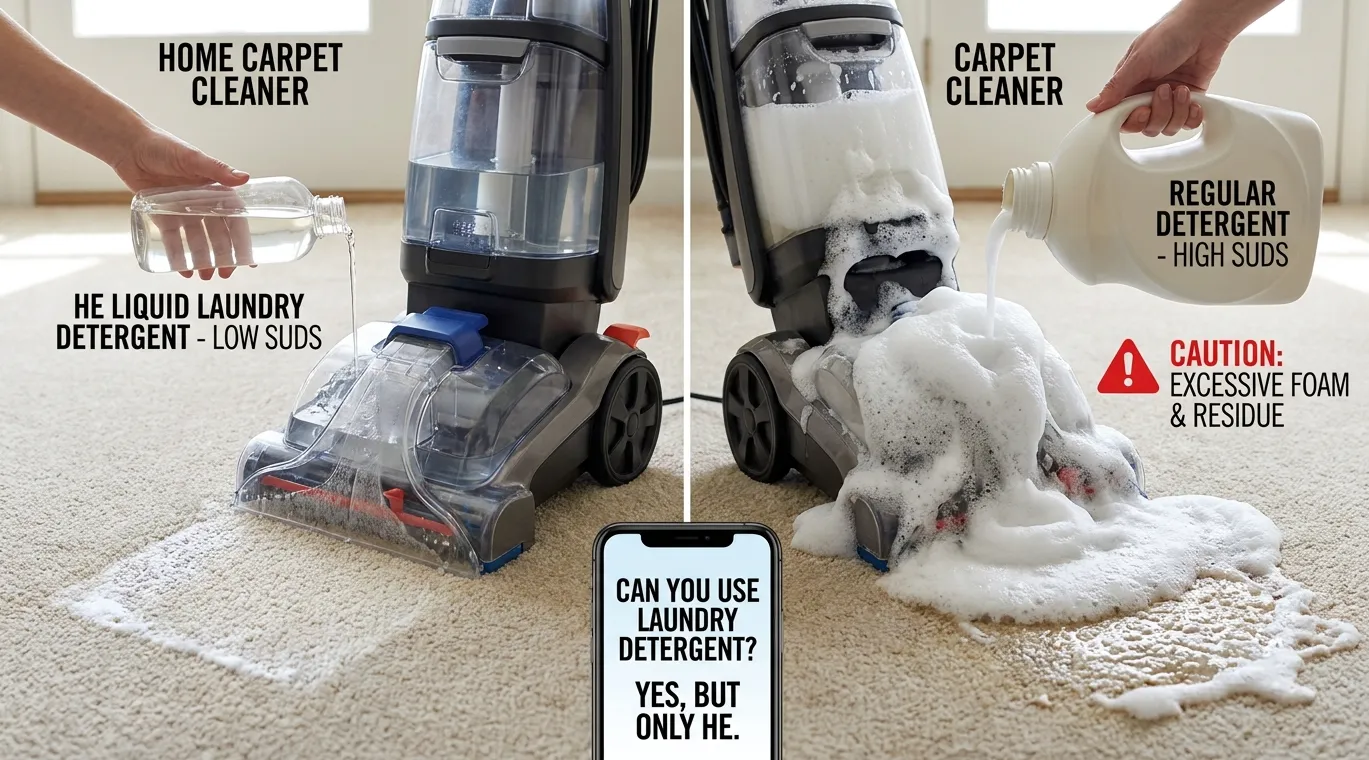
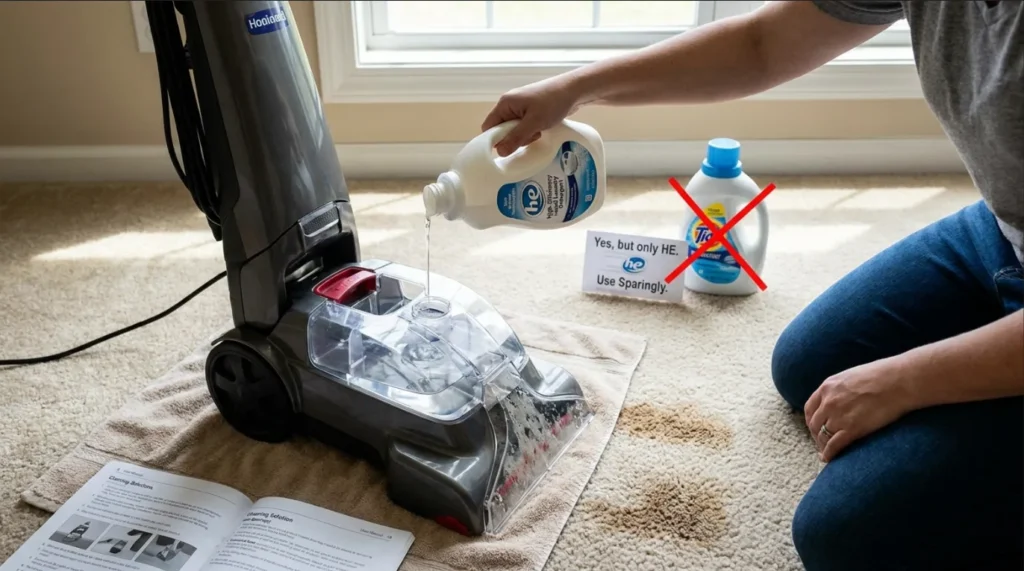
Yes, you can use laundry detergent in a carpet cleaner, but only under specific conditions. The type of detergent matters enormously. High-efficiency (HE) liquid laundry detergent is the safest option because it produces low suds and rinses cleanly from carpet fibers. Regular, non-HE laundry detergent, however, can cause excessive foaming, leave behind a sticky residue, and even damage your machine or void its warranty. The short answer is: if you use the right product in the right amount, it works. If you reach for the wrong bottle, you could end up with bigger problems than a dirty carpet.
Understanding the Difference Between Carpet Cleaners and Laundry Detergents
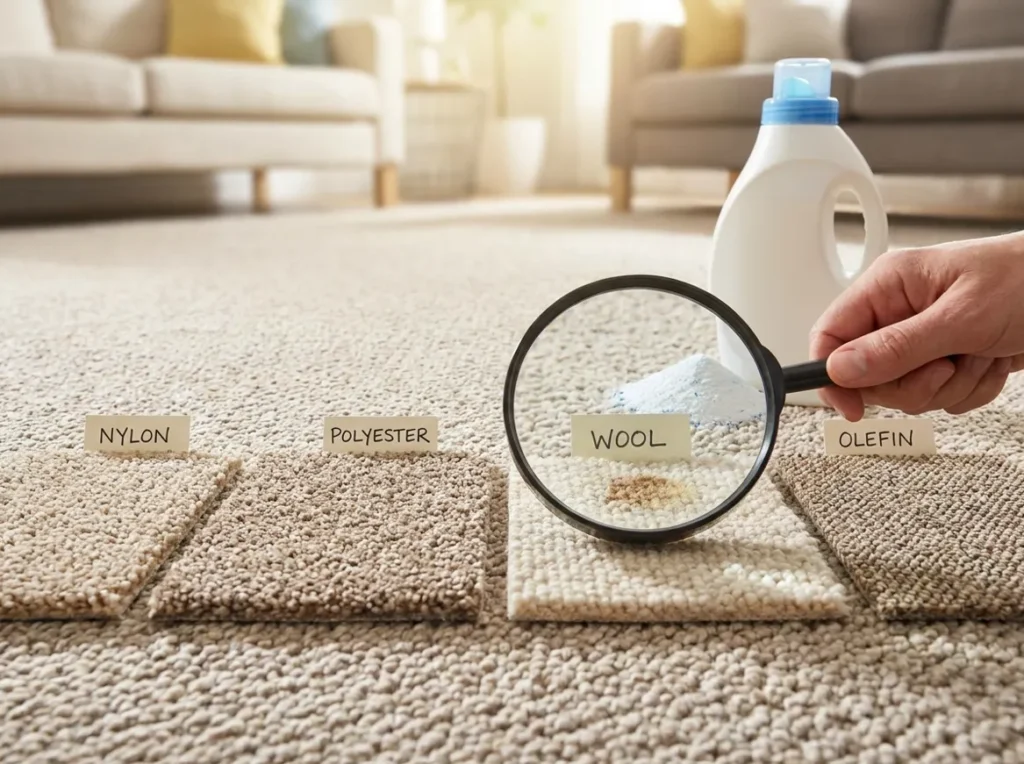
Before using any product in your carpet cleaning machine, it helps to understand what each formula is actually designed to do.
Carpet cleaning solutions — whether branded for Bissell, Hoover, or Rug Doctor — are formulated specifically for hot water extraction. They contain surfactants that break down ground-in soil, defoaming agents to prevent machine clogging, and rinse-aid properties that minimize residue in pile fibers like nylon, polyester, and wool. Most commercial carpet shampoos are also pH-balanced to protect synthetic and natural fibers alike.
Laundry detergents, on the other hand, are designed to work inside a washing machine drum, where clothing goes through a dedicated rinse cycle. They contain enzymes, optical brighteners, and fragrance compounds. Because a washing machine rinses and spins excess detergent out, laundry products are formulated to produce quite a bit of lather. A carpet cleaning machine, however, does not rinse your carpet the way a washing machine rinses a shirt. Whatever you put in that solution tank stays in your carpet until it fully dries — which is why residue is such a serious concern. If you’re unsure whether DIY methods are right for your floors, our professional carpet cleaning services in San Angelo take the guesswork out of the equation entirely.
The Real Risk: Why Regular Laundry Detergent Can Cause Problems
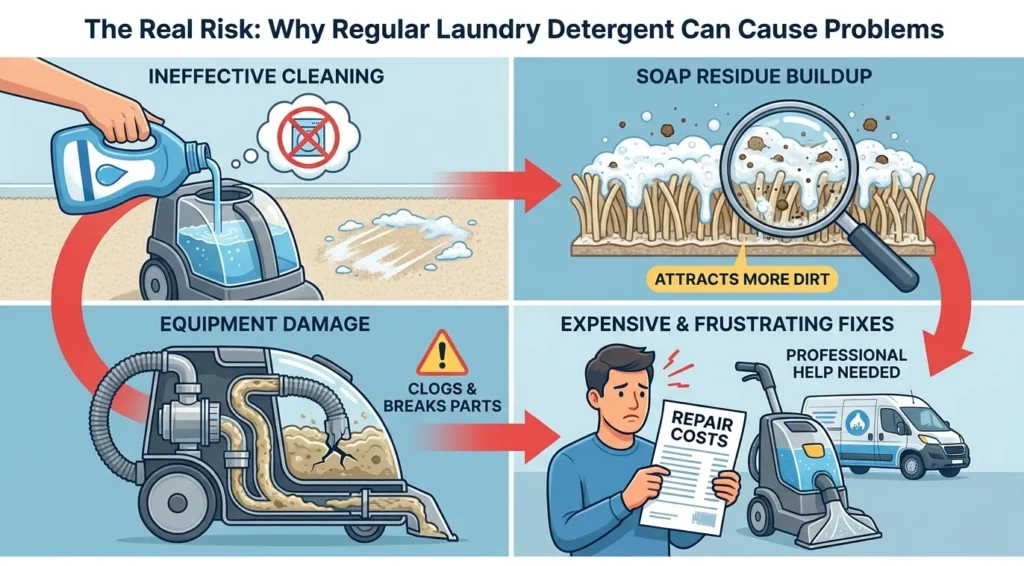
Using the wrong detergent in your carpet cleaner is not just ineffective. It can cause multiple compounding issues that are expensive and frustrating to fix.
Residue Buildup
When laundry detergent is not fully extracted from carpet fibers, it leaves behind a sticky film. This film acts like a magnet for dust, pet dander, and foot traffic soil. In practical terms, your carpet will look clean for a week and then appear dirtier than it did before you cleaned it. This cycle can be difficult to break without professional cleaning.
Excessive Foaming
Standard laundry detergents are high-sudsing products. When introduced into the water tank of a carpet cleaner, they can produce foam that overflows through the machine’s internal components. Foam buildup in the motor housing or suction tubes can lead to mechanical failure. This is one of the primary reasons most major carpet cleaner manufacturers recommend against using household laundry products in their machines. According to Bissell’s official FAQ, their machines are engineered to perform best with purpose-made cleaning formulas.
Color Fading and Fiber Damage
Certain laundry detergents contain optical brighteners and bleaching agents. These compounds are excellent at whitening white shirts but can strip color from dyed carpet fibers. Wool carpets and hand-knotted rugs are particularly vulnerable — and if you own an area rug with sentimental or monetary value, the stakes are even higher. Even synthetic carpets made from nylon or polypropylene can lose vibrancy over time with repeated exposure to optical brighteners. For delicate pieces, professional area rug cleaning is a far safer route than any DIY detergent experiment.
Warranty Voiding
This is the point most people overlook until it is too late. Brands like Hoover have historically stated that using non-approved cleaning solutions voids the machine warranty. Bissell’s official warranty policy is slightly more consumer-friendly, noting that the mere use of non-Bissell consumables does not automatically void a warranty, but damage caused by incompatible products may not be covered. The bottom line is that if your machine breaks down after you have been using laundry detergent in it, you may be on your own for the repair cost.
When It Is Actually Fine to Use Laundry Detergent
If you have run out of carpet cleaning solution and need to clean now, laundry detergent can serve as a functional substitute provided you follow strict guidelines. Here is when and how it works acceptably.
HE Liquid Detergent Is the Only Recommended Type
HE stands for high-efficiency, and it refers to detergents formulated for modern front-load and top-load washing machines that use very little water. Because these machines use minimal water, HE detergents are engineered to produce low foam and dissolve rapidly. Those same properties make them far more suitable for carpet cleaning machines than regular detergent. Look for the HE symbol on the bottle before using any laundry product in your carpet cleaner.
Brands like Tide Free and Gentle HE, Persil ProClean HE, and All Free Clear HE are all lower-foam options that have been used by homeowners in carpet cleaners with reasonable results. The Good Housekeeping Institute’s carpet cleaning guidance consistently recommends low-suds products and thorough rinsing as the two most important factors in any home carpet cleaning session.
Liquid Over Powder, Always
Powder detergents should never be used in a carpet cleaner. The granules do not dissolve fully in the water tank, and undissolved particles can clog spray nozzles, scratch internal pump components, and leave a gritty residue embedded in carpet pile. Stick to liquid HE formulas exclusively.
Less Is Far More
The correct dilution ratio matters enormously. A ratio of one tablespoon of HE liquid laundry detergent per quart of warm water is the upper limit. Some experienced users prefer as little as half a tablespoon per quart. Using more detergent does not produce a deeper clean — it only increases the amount of residue left behind in your carpet.
Step-by-Step Guide to Using Laundry Detergent in a Carpet Cleaner Safely
Following a structured process reduces the risk of residue, machine damage, and carpet discoloration.
Step 1: Vacuum Thoroughly First
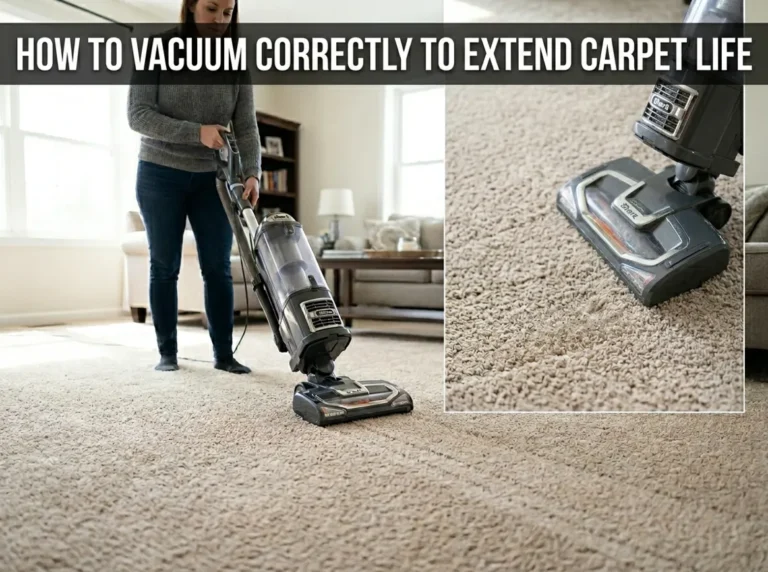
Always vacuum the carpet before wet cleaning. Removing loose debris, pet hair, and surface-level dirt before using the carpet cleaner makes the entire process more effective and prevents the vacuum suction of your carpet cleaner from becoming clogged with dry soil.
Step 2: Do a Patch Test
Mix a small amount of the HE detergent with water and apply it to a hidden section of carpet, such as inside a closet or behind a piece of furniture. Wait five to ten minutes and check for any color change, fiber shrinkage, or unusual texture. If the test area looks and feels normal, proceed.
Step 3: Prepare the Solution Correctly
Fill the clean water tank with warm water first. Then add one tablespoon of HE liquid detergent per quart of water. Never pour detergent directly into the tank without water already present, as this increases the concentration of suds at the spray nozzle.
Step 4: Clean the Carpet in Slow, Overlapping Passes
Move the carpet cleaner slowly to give the spray jets and suction time to work. Overlapping each pass slightly ensures consistent coverage and maximum water extraction.
Step 5: Follow with a Plain Water or White Vinegar Rinse
This step is the one most people skip, and it is arguably the most important. After cleaning with the detergent solution, empty the solution tank and refill it with plain warm water or a mixture of warm water and a small amount of white vinegar. Run the machine over the carpet again. This rinse pass removes residual detergent from the fibers and helps neutralize any alkalinity left behind by the surfactants. White vinegar also acts as a natural deodorizer and fabric softener. Homeowners in the Ballinger area who find the DIY rinse process too involved can always call on our carpet cleaning team serving Ballinger for a thorough, professionally extracted clean.
Step 6: Allow Adequate Drying Time
Carpet cleaning machines extract a significant amount of moisture, but your carpet will still be damp after cleaning. Open windows, run a ceiling fan, or place a portable fan near the carpet to speed up drying. Walking on wet carpet can reintroduce soil and flatten pile, so wait at least two to four hours before using the room normally.
Comparison Table: Laundry Detergent vs Dedicated Carpet Cleaning Solution
| Feature | HE Liquid Laundry Detergent | Dedicated Carpet Cleaning Solution |
|---|---|---|
| Foam Level | Low (HE only) | Very Low (purpose-formulated) |
| Residue Risk | Moderate | Low |
| Color Safety | Moderate (no bleach formulas) | High (pH-balanced) |
| Machine Compatibility | Partial | Full |
| Warranty Impact | Possible risk | No risk |
| Enzyme Action | Yes (stain-lifting) | Yes (carpet-specific) |
| Cost | Lower | Higher |
| Availability | High (supermarkets) | Moderate (specialty stores) |
| Recommended for Wool | Not ideal | Yes (if pH-neutral) |
| Rinse Required | Yes, strongly recommended | Less critical |
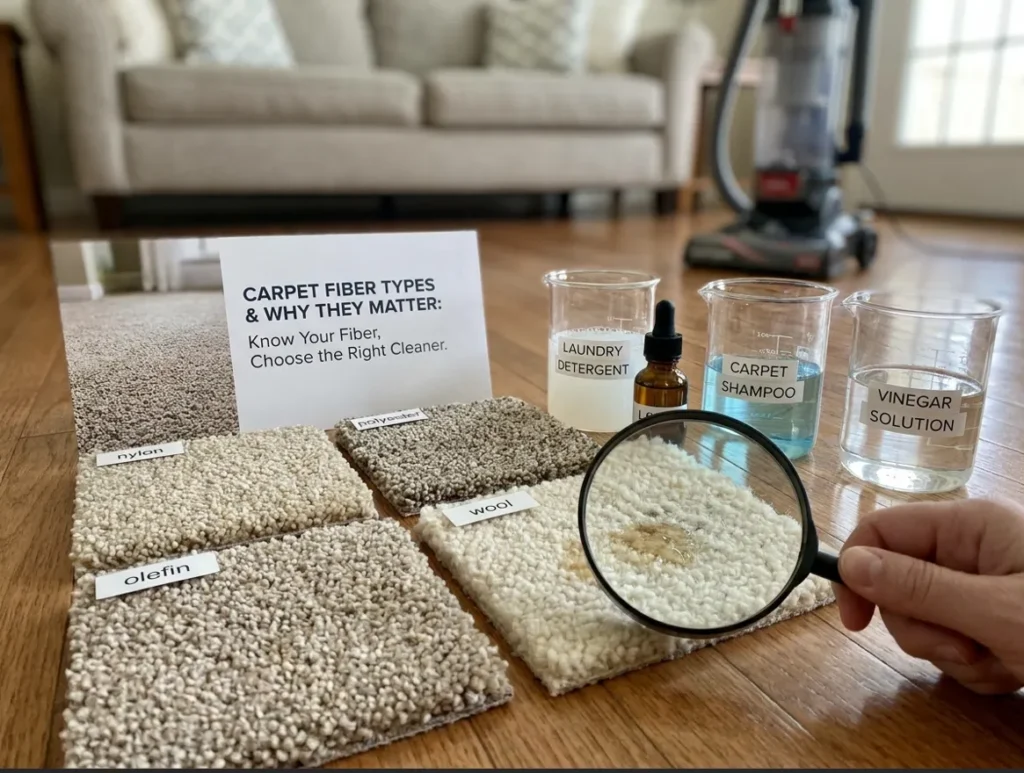
Carpet Fiber Types and Why They Matter
Not all carpets respond the same way to laundry detergent. Understanding your carpet’s fiber composition helps you make a safer decision.
Nylon Carpets
Nylon is the most common synthetic carpet fiber and is generally resilient. It can tolerate mild laundry detergent without significant color loss, provided the formula does not contain bleach or optical brighteners.
Polyester and Olefin Carpets
These fibers are moisture-resistant and relatively easy to clean. They tolerate HE detergent reas
onably well, but their lower dye-fastness means color fading is a greater risk than with nylon. The Carpet and Rug Institute’s fiber characteristics guide is an excellent reference for understanding how different materials respond to cleaning agents before you put anything in your machine.
Wool Carpets
Wool is a natural protein fiber and is far more sensitive to pH imbalance than synthetic carpets. Most laundry detergents are alkaline, and repeated alkaline cleaning can cause wool fibers to felt, shrink, and lose their soft texture. For wool area rugs or wool-blend wall-to-wall carpeting, stick with a pH-neutral carpet cleaning solution specifically labeled safe for natural fibers.
Berber and Loop Pile Carpets
The tight loop structure of Berber carpets can trap detergent residue more readily than cut-pile carpets. Extra rinse passes are important if you choose to use laundry detergent on Berber.
Better Alternatives to Laundry Detergent for Emergency Carpet Cleaning
If you have run out of carpet shampoo and you are hesitant to use laundry detergent, a few other household products are worth considering.
White Vinegar and Warm Water
A mixture of equal parts white vinegar and warm water is a gentle, effective cleaning solution for lightly soiled carpets. White vinegar is mildly acidic, which helps break down alkaline soils like pet urine and foot traffic grime. It leaves no sticky residue and is completely safe for most carpet fibers.
Dish Soap in Very Small Quantities
A few drops of mild dish soap like Dawn in a full tank of warm water can work for spot treatment of greasy stains. However, dish soap is a high-foaming product and should not be used routinely in a carpet cleaning machine. The foam it produces can be difficult to extract fully.
Baking Soda for Odor
While baking soda cannot be run through a carpet cleaning machine, sprinkling it on dry carpet before vacuuming is an effective way to absorb odors without chemical residue. Customers in Christoval dealing with persistent odor issues have found our carpet cleaning services in Christoval to be a reliable solution when home remedies aren’t cutting it.
What Professional Carpet Cleaners Actually Recommend
Professional carpet cleaning companies that use truck-mounted hot water extraction systems typically advise homeowners to avoid laundry detergent in consumer carpet cleaning machines. The core reason is the rinse cycle problem: professional truck mounts operate at significantly higher water pressure and extraction power than home machines, which means they can flush residue out of carpet fibers more effectively. A home carpet cleaner, even a high-quality Bissell ProHeat or Hoover SmartWash, does not have the same extraction power.
That said, professionals acknowledge that in a pinch, a small amount of HE detergent diluted correctly and followed by a rinse pass can produce a clean carpet without lasting damage. For businesses that can’t afford to gamble on DIY results, our commercial carpet cleaning service offers professional-grade extraction with industrial equipment designed for high-traffic environments.
Frequently Asked Questions
Can I use laundry detergent in a Bissell carpet cleaner? Yes, but only HE liquid detergent in very small amounts. Bissell’s official warranty policy states that using non-Bissell cleaning formulas does not automatically void your warranty, but damage caused by incompatible products may not be covered under the warranty terms.
Can I use Tide in my carpet cleaner? Tide HE liquid (not the regular formula) can be used in small quantities. Use no more than one tablespoon per quart of water and always follow with a plain water rinse pass to remove any soap residue.
Will laundry detergent make my carpet sticky? It can if used in excess or if you skip the rinse pass. The surfactants in laundry detergent leave a film on carpet fibers when they are not fully extracted. This film attracts dirt and makes the carpet feel tacky underfoot.
Can I use powder detergent in a carpet cleaner? No. Powder detergent should never be used in a carpet cleaning machine. The granules can clog the spray nozzle, damage internal pumps, and leave gritty deposits in carpet fibers.
Is it better to use vinegar or laundry detergent in a carpet cleaner? For a light clean or odor removal, white vinegar diluted with water is a safer choice. For heavier soil and stains, a small amount of HE liquid laundry detergent with a vinegar rinse afterward can be more effective. If neither option is giving you the results you need, the cleanest solution is to schedule a professional cleaning with our San Angelo team and let us handle it right the first time.
Final Verdict
Using laundry detergent in a carpet cleaner is not the disaster some sources make it out to be, but it is also not as straightforward as others suggest. The key variables are the type of detergent (HE liquid only), the dilution ratio (one tablespoon per quart of water, maximum), the carpet fiber type, and whether you follow up with a rinse pass. Get those four things right, and laundry detergent is a workable, budget-friendly substitute when you have run out of dedicated carpet shampoo.
For regular maintenance cleaning, however, a purpose-made carpet cleaning solution is always the better choice. It is specifically formulated for the mechanics of carpet cleaning machines, it protects carpet fiber integrity over time, and it keeps your machine running properly for longer. Save the laundry detergent workaround for genuine emergencies — and if you ever need a deep clean that goes beyond what any DIY method can deliver, our upholstery and carpet cleaning specialists in San Angelo are ready to help. Your carpets and your machine will both be better for it.