How to Vacuum Correctly to Extend Carpet Life
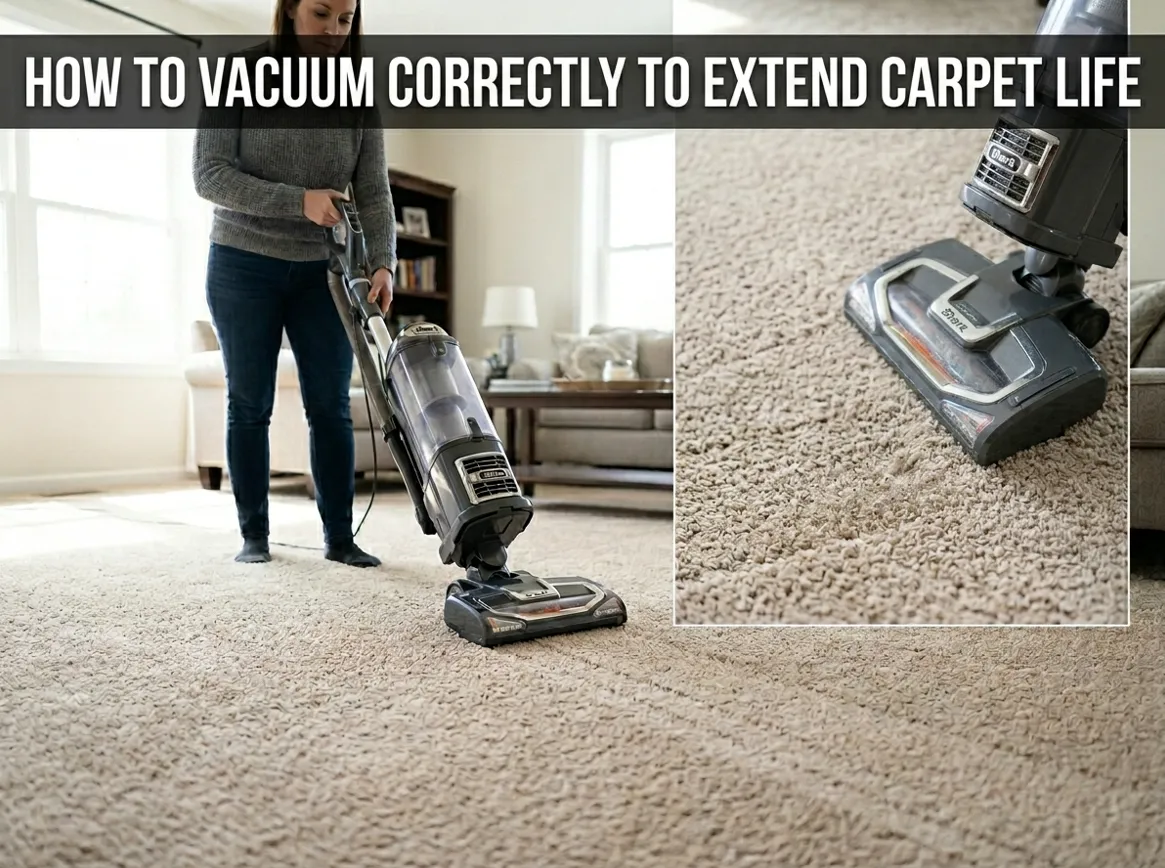
To vacuum correctly and extend carpet life, use a HEPA-filtered vacuum suited to your carpet pile height, set the beater bar at the right height for your fiber type, make slow overlapping passes in multiple directions, vacuum high-traffic areas at least three times per week, and never rush the process. Speed is the single most common vacuuming mistake, and it costs more carpet fiber years than almost any other controllable factor in a home. Done correctly, vacuuming is not just a cleanliness habit; it is the most cost-effective carpet preservation strategy available to any homeowner. When vacuuming alone is no longer enough, professional carpet cleaning in San Angelo picks up where home maintenance leaves off.
Most people vacuum the way they mow a lawn — fast back-and-forth passes to cover ground quickly and move on. That approach removes surface debris but leaves behind the fine abrasive particulate embedded deeper in the pile that causes the fiber degradation responsible for premature matting, traffic lane dulling, and shortened carpet life. This guide covers exactly what correct vacuuming looks like, why each element matters, and how the right technique makes a measurable difference in how long your carpet performs.
Why Vacuuming Technique Matters More Than Vacuuming Frequency
Most carpet care advice emphasizes how often to vacuum without adequately addressing how to vacuum, which is arguably the more important variable. A carpet vacuumed daily with poor technique accumulates less surface debris than an unmaintained carpet, but it still experiences fiber damage from the abrasive particulate that fast, shallow vacuuming consistently fails to remove.
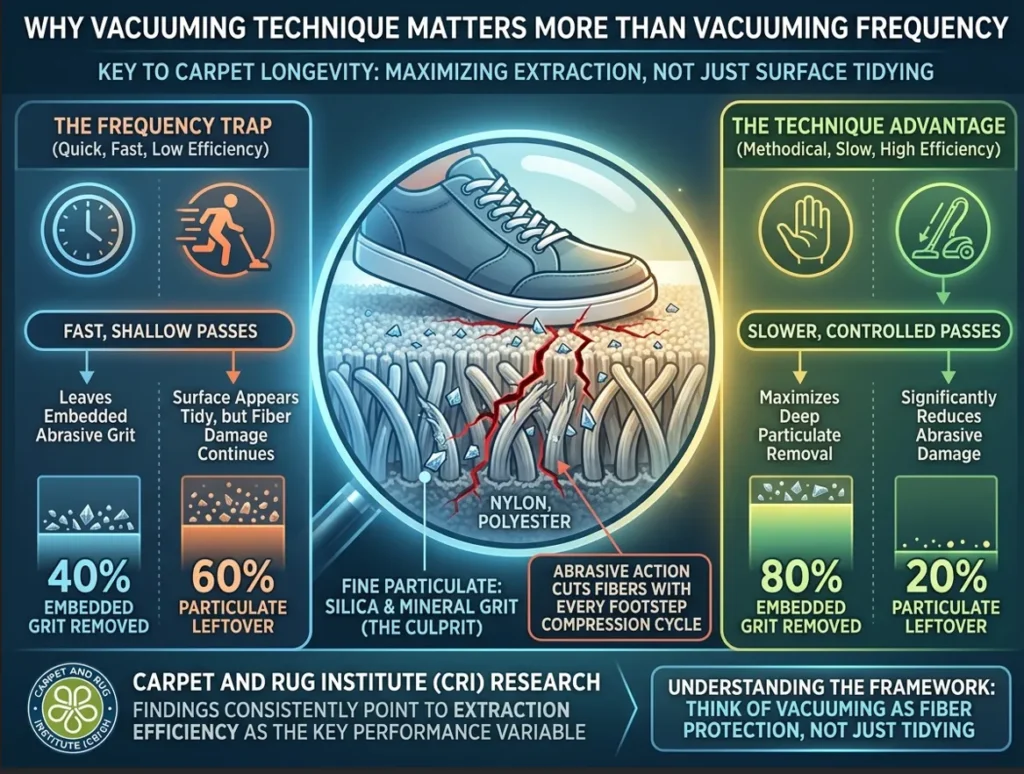
The Carpet and Rug Institute (CRI), the primary industry standards body for carpet care in North America, has conducted extensive research on the relationship between vacuuming practices and carpet longevity. Their findings consistently point to extraction efficiency as the key performance variable: the percentage of embedded soil actually removed per pass, not the frequency of passes, is what determines how much abrasive damage accumulates in carpet fibers over time.
Fine particulate, particularly silica and mineral grit, is the primary culprit in fiber degradation. These particles are abrasive enough to cut into nylon, polyester, and other synthetic carpet fibers with every footstep compression cycle. A vacuum that removes 40 percent of this particulate per session leaves behind 60 percent to continue cutting fiber until the next cleaning. A vacuum and technique combination that removes 80 percent leaves significantly less accumulated abrasion damage between sessions. Over months and years, that difference is visible in the condition of the carpet. This is especially true in San Angelo, where West Texas caliche and silica dust creates a higher-than-average abrasive particulate load in residential carpet — a problem explored in detail in our post on how West Texas dust affects your carpet lifespan.
Understanding this framing changes how you approach vacuuming. Instead of thinking about it as a surface tidying task, think of it as a fiber protection intervention where the goal is maximum particulate removal, not maximum area coverage per minute.
Choosing the Right Vacuum for Your Carpet Type
Technique only delivers its full benefit when the equipment is appropriate for the carpet being cleaned. The vacuum that works well on a low-pile commercial-style carpet in a home office is not necessarily the right tool for a thick plush carpet in a bedroom, and using the wrong machine incorrectly can actually damage carpet rather than protect it.
Upright Vacuums with Beater Bar and Suction
Upright vacuums combining a rotating beater bar with suction are the most effective option for most residential carpet types. The rotating brush agitates carpet pile, loosening embedded particulate that suction alone cannot lift, while the suction captures and removes the loosened material. Brands including Miele, Dyson, Shark, and Hoover offer upright models across price ranges that perform well on standard residential carpet when used with correct technique.
For medium-pile and deep-pile carpet, an upright with an adjustable beater bar that can be set to match the pile height is essential. A beater bar set too low for the pile height can cause excessive fiber agitation that accelerates wear rather than reducing it.
Canister Vacuums with Power Heads
Canister vacuums equipped with motorized power head attachments deliver performance comparable to quality uprights while offering greater flexibility for cleaning stairs, upholstered furniture, and areas under furniture overhangs. Miele’s canister lineup is particularly well-regarded by carpet care professionals for combining strong suction, HEPA-sealed filtration, and gentle yet effective power head action on carpet fibers. If you also have area rugs in your home, a canister vacuum with a variable suction setting is the most versatile tool for maintaining both wall-to-wall carpet and delicate rug surfaces.
Robot Vacuums as Supplementary Tools
Robot vacuums from brands including iRobot Roomba and Ecovacs have improved substantially in recent years and serve a useful maintenance function between manual vacuuming sessions. Their primary value is keeping surface debris from accumulating between proper manual vacuuming sessions, not replacing those sessions. Robot vacuums generally lack the suction power and beater bar force of full-sized vacuums and are not effective at removing the deeply embedded particulate that causes fiber damage. Use them as supplements rather than substitutes.
HEPA Filtration Is Not Optional for Carpet Life
A vacuum without sealed HEPA filtration does not fully protect either carpet or air quality. Standard filters allow fine particulate to pass through the vacuum exhaust and be redistributed onto the carpet surface and into the room air. According to the EPA’s indoor air quality guidelines, a sealed HEPA system captures particles down to 0.3 microns at 99.97 percent efficiency, genuinely removing fine abrasive material from the carpet rather than cycling it back. When comparing vacuum models, look for the term sealed HEPA system rather than just HEPA filter, since an unsealed system can still allow bypass around the filter media.
Setting the Correct Beater Bar Height
The beater bar height adjustment is the most frequently misused setting on residential vacuums, and incorrect height is a significant source of unnecessary carpet wear.
When the beater bar is set too low relative to the carpet pile height, it beats against the fiber tips with excessive force, causing fiber abrasion, yarn distortion, and accelerated pile crushing. This damage is cumulative and not reversible through cleaning. Vacuums set too low on plush or medium-pile carpet are one of the most common causes of premature traffic lane matting that homeowners incorrectly attribute to carpet quality.
When the beater bar is set too high, it barely contacts the pile surface and provides minimal agitation benefit, essentially leaving the vacuum operating on suction alone. This is less damaging than the too-low setting but significantly reduces extraction efficiency.
The correct setting keeps the beater bar in light, consistent contact with the top of the carpet pile, providing gentle but effective agitation without grinding into the fiber structure. Most quality vacuums provide three to five height settings. The correct one produces a slight resistance to pushing the vacuum forward and a noticeable sound from the beater bar contact, but not a sound indicating the bar is laboring against excessive resistance.
To find the correct setting on an unfamiliar carpet, start at the highest setting and lower one step at a time until you hear and feel the beater bar making consistent light contact with the pile. That setting, or one step lower on very dense pile, is generally the right starting point.
For very high-pile shag carpet or wool carpet with loops that could catch in a rotating brush, suction-only mode without the beater bar is the safer choice. Many modern vacuums offer a brush roll shutoff setting specifically for this purpose.
The Correct Speed for Effective Vacuuming
Vacuuming speed is perhaps the most universally ignored variable in carpet care, and it is one of the highest-impact adjustments any homeowner can make immediately without purchasing new equipment.
Research on vacuum extraction efficiency consistently shows that the slow forward stroke is where the majority of soil removal occurs. The vacuum dwell time — meaning the amount of time the suction and beater bar have to work on a given section of carpet as the machine moves forward — directly determines how much embedded particulate is lifted and captured. Moving quickly across carpet gives the machine insufficient time to work on the embedded material below the surface level.
The correct forward stroke pace is approximately one foot per second, which feels considerably slower than the natural walking pace most people use when vacuuming. At this speed, the vacuum has adequate time to agitate, loosen, and capture embedded material rather than just surface debris. The backward stroke serves to re-fluff carpet pile disturbed by the forward pass and can be performed at a slightly faster pace, though slow is still better than fast in both directions.
A practical test: vacuum a two-foot section of carpet slowly and then hold the vacuum in place stationary for three seconds. If the machine captures additional visible debris when held stationary, your normal pace is still too fast.
Why Overlapping Passes Matter
Single-pass vacuuming in one direction leaves significant amounts of carpet area inadequately cleaned. The geometry of how a beater bar interacts with carpet pile means that a single forward stroke does not agitate every fiber strand in the path of the vacuum head. Overlapping passes by approximately 50 percent of the vacuum head width on each successive pass ensures that every section of carpet receives adequate agitation from both sides of the beater bar.
Beyond overlapping, changing direction between passes produces meaningfully better extraction results than vacuuming in a single direction. Carpet pile leans slightly in the direction it has been compressed by traffic and previous vacuuming. Running the vacuum perpendicular to or opposite from the previous direction lifts pile that was leaning away from the vacuum’s suction zone on the first pass, exposing embedded particles that would otherwise be missed.
For heavily soiled areas, a cross-hatch pattern using three passes — first in one direction, then perpendicular, then diagonally — extracts significantly more embedded soil than any single-direction vacuuming approach. Carpet care professionals routinely use this technique on high-traffic areas prior to professional carpet cleaning, and it translates directly to home maintenance vacuuming.
Vacuuming Frequency by Zone and Household Type
Blanket frequency recommendations miss the reality that different areas of a home accumulate soil at dramatically different rates. A frequency schedule matched to actual soil load produces better carpet protection with the same total time investment as a uniform approach.
High-Traffic Zones
Entryways, hallways, living room traffic paths, and kitchen-adjacent carpeted areas accumulate soil at the highest rate. These zones benefit from vacuuming every day or every other day in households with children, pets, or multiple occupants. At minimum, three times per week is the threshold below which fine abrasive particulate begins accumulating at rates that accelerate fiber damage. The Carpet and Rug Institute specifically identifies high-traffic zone frequency as the most impactful variable in residential carpet longevity programs.
Medium-Traffic Zones
Living room seating areas away from primary foot paths, dining room carpet, and home office carpet with regular occupancy benefit from vacuuming two to three times per week. These areas accumulate soil more slowly than primary traffic lanes but still experience regular compression and particulate settling that warrants more than once-weekly attention.
Low-Traffic Zones
Guest bedrooms, formal sitting rooms, and other areas with infrequent occupancy accumulate soil primarily through HVAC circulation and occasional foot traffic. Weekly vacuuming is appropriate and adequate for these areas. However, even in low-traffic areas, vacuuming should not be skipped for more than two weeks, as fine airborne particulate from HVAC systems settles continuously onto all carpet surfaces regardless of foot traffic.
Households with Pets
Pet hair and dander require a specific adjustment to any vacuuming frequency schedule. Beyond the air quality implications, pet hair mats into carpet pile and creates a matrix that captures additional soil more aggressively than bare carpet fiber. Daily vacuuming of pet-frequented areas is not excessive in households with shedding dogs or cats. If pet odors have already embedded into carpet fibers despite regular vacuuming, professional pet odor removal using enzyme-based treatments is the only reliable way to eliminate them at the source rather than masking them temporarily.
Vacuuming Technique for Stairs
Stairs are among the highest-wear carpet areas in any home and among the most frequently under-vacuumed because the process is physically awkward. The combined effects of concentrated foot traffic, directional wear from stair climbing, and reduced cleaning frequency produce accelerated fiber damage on stair carpet that shortens its functional life noticeably faster than flat floor carpet in comparable traffic.
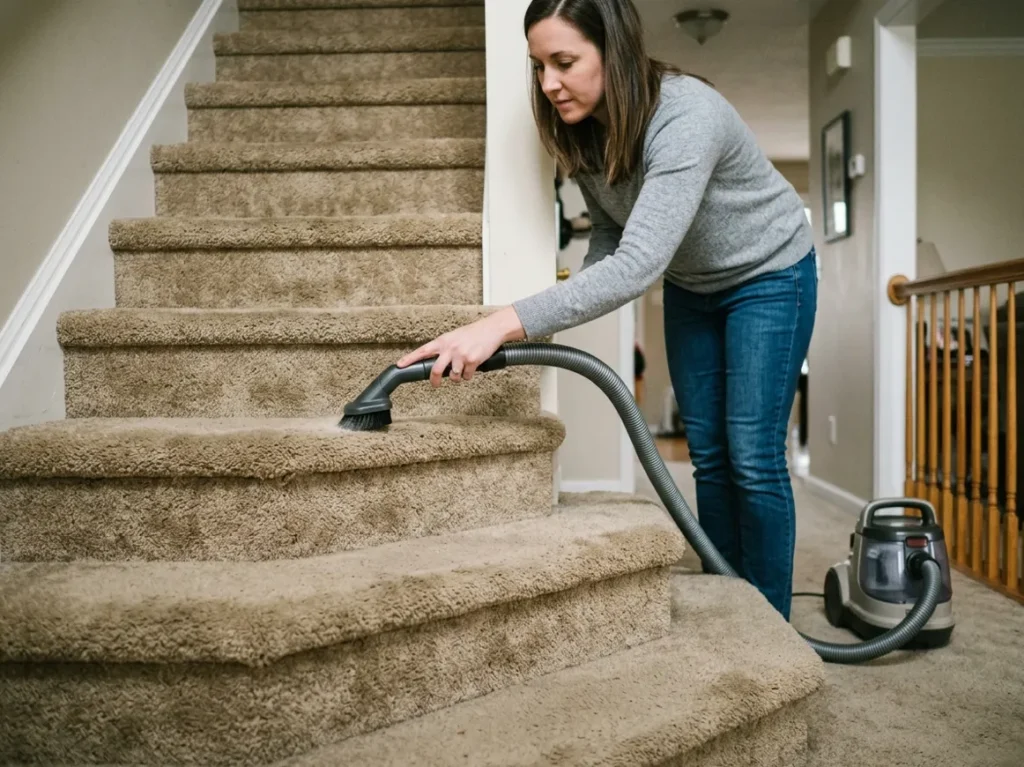
Effective stair vacuuming requires an upholstery or crevice attachment rather than a full vacuum head, since the geometry of stair treads and risers does not accommodate a standard floor head effectively. Canister vacuums with flexible hose lengths are generally more practical for stairs than uprights, which require awkward positioning to reach each step adequately.
Vacuum each tread thoroughly including the back edge where the tread meets the riser, which accumulates concentrated soil from toe strike patterns. The riser face itself also collects dust and should be vacuumed on the same schedule as the treads. Stair carpet benefits from vacuuming at least twice weekly in households with regular stair use, and the slow deliberate technique that applies to floor carpet is equally important on stairs.
Pre-Vacuuming Steps That Improve Results
Several preparation steps before beginning to vacuum produce meaningfully better results and are worth incorporating into a routine that prioritizes carpet preservation.
Picking up large debris manually before vacuuming prevents the vacuum from either missing large items that deflect suction or jamming on objects that damage the beater bar or intake channel. Coins, paperclips, small toys, and similar objects that reach the beater bar mechanism can cause damage to both the vacuum and, in some cases, the carpet if they are flung by the rotating brush rather than captured.
Treating spot stains before vacuuming, rather than after, allows any moisture from spot treatment to begin drying during the vacuuming session. Vacuuming over a damp treated spot can cause the vacuum to pick up cleaning solution residue that then deposits into other carpet areas. For stains that resist spot treatment, our guide on why some stains reappear after cleaning explains the wicking process and what to do about it.
Running an air purifier or simply opening windows briefly before vacuuming reduces the volume of airborne particulate that will resettle onto carpet during the vacuum session. In dusty environments including West Texas conditions around San Angelo, Ballinger, and Christoval, this step has a more pronounced impact than in more temperate climates.
Vacuum Maintenance That Directly Affects Carpet Care
A poorly maintained vacuum is a significant source of carpet damage that most homeowners never consider. Several specific maintenance tasks have a direct impact on how effectively the vacuum protects carpet.
Filter Replacement and Cleaning
A clogged or saturated filter reduces suction dramatically and, in non-sealed systems, allows fine particulate to bypass the filter entirely and be exhausted back onto the carpet surface. HEPA filters in residential vacuums should be replaced or cleaned according to manufacturer specifications, typically every three to six months depending on use intensity. In high-dust households or those with multiple pets, more frequent filter attention is warranted. Running a vacuum with a full or clogged filter actively redistributes fine abrasive material onto carpet rather than removing it.
Beater Bar and Brush Roll Maintenance
Hair, fiber, and thread wrap around the beater bar over time and reduce its agitation effectiveness significantly. A beater bar loaded with wrapped hair essentially becomes a smooth roller that provides minimal pile agitation. Most manufacturers recommend clearing wrapped material from the brush roll every three to four vacuuming sessions, or whenever performance seems reduced. Scissors or a seam ripper are the appropriate tools for cutting wrapped material free without damaging the brush bristles.
Bag and Canister Management
For bagged vacuums, replacing the bag at 75 percent full rather than waiting until completely full maintains consistent suction throughout the session. A nearly full bag significantly reduces airflow and extraction efficiency during the final portion of its capacity. For bagless canister models, emptying the canister after every session and cleaning the canister walls prevents fine dust from caking and restricting airflow.
Belt Inspection
The belt that drives the beater bar stretches and degrades over time, reducing the rotational speed of the brush roll and therefore its agitation effectiveness. Most manufacturers recommend belt replacement every 12 to 18 months for average household use. A simple test: hold the beater bar by hand while the vacuum is running and observe whether the belt slips easily. Significant slip indicates a belt due for replacement.
The Connection Between Correct Vacuuming and Professional Cleaning Intervals
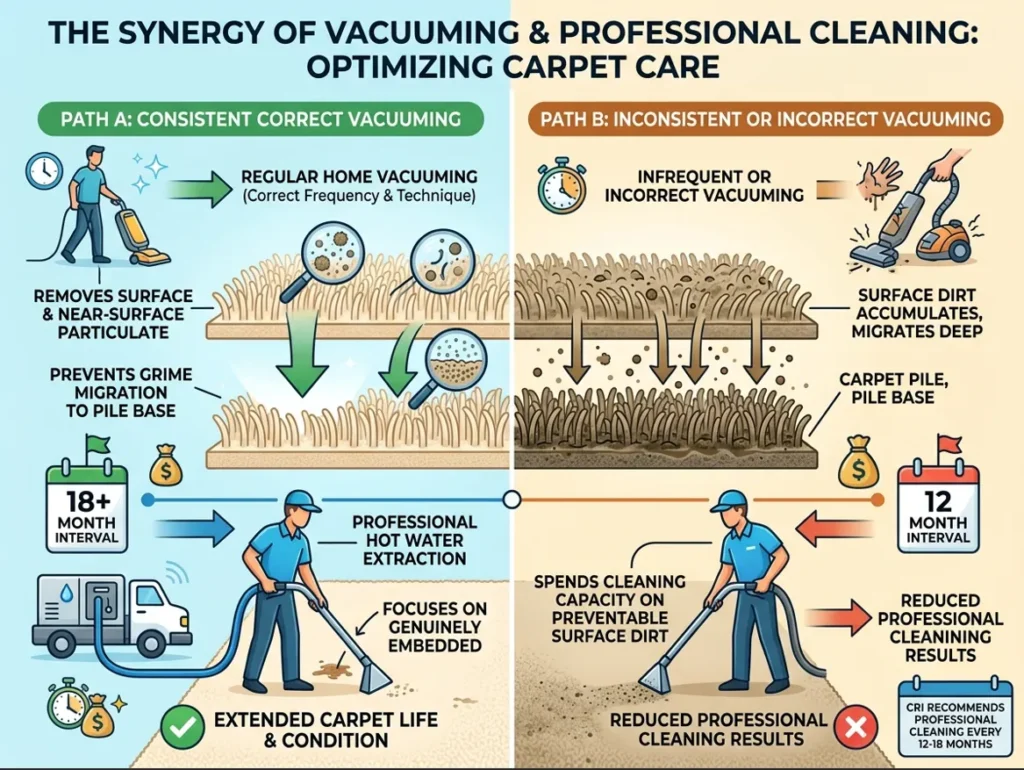
Correct vacuuming and professional carpet cleaning are not competing approaches to carpet care; they operate on different timescales and address different layers of the contamination problem. Understanding how they interact helps homeowners optimize the investment in both.
Correct vacuuming, performed consistently at appropriate frequency, keeps the upper portion of carpet pile clear of the surface and near-surface particulate that would otherwise migrate downward into the pile base between professional cleaning visits. This means that when professional hot water extraction is performed, the technician is addressing genuinely embedded deep-pile contamination rather than spending the cleaning’s extraction capacity on material that home vacuuming could have removed.
The practical outcome is that consistent correct vacuuming extends the interval between professional cleanings needed to maintain carpet in good condition and improves the results of each professional cleaning. The Carpet and Rug Institute recommends professional hot water extraction every 12 to 18 months as a baseline, but households that vacuum correctly at appropriate frequency often find their carpets remain in better condition at the 18-month mark than neighboring households with similar carpet that vacuum infrequently or incorrectly. Homeowners across Miles and the wider Tom Green County area deal with above-average dust load that makes this relationship between home vacuuming and professional cleaning especially important.
Schedule Your Professional Deep Clean — Free Quote
Common Vacuuming Mistakes That Shorten Carpet Life
Knowing what to avoid is as practical as knowing what to do, and several very common habits cause ongoing damage that homeowners often attribute to carpet quality rather than maintenance practice.
Vacuuming only when carpet looks dirty is one of the most damaging habits in residential carpet care. Fine abrasive particulate that causes fiber damage is invisible to the naked eye. By the time carpet looks dirty, the damaging particulate has typically been embedded for days or weeks already. Frequency schedules based on visual assessment consistently under-protect carpet compared to schedules based on traffic pattern and soil load.
Using the same vacuum setting for all carpet types throughout the home ignores the reality that pile height varies between rooms and the correct beater bar height varies with it. Checking and adjusting the height setting when moving between rooms with different carpet pile heights takes seconds and meaningfully reduces unnecessary fiber agitation in lower-pile areas and improves extraction in higher-pile areas.
Vacuuming over power cords, fringe edges on area rugs, or loose carpet seams risks both vacuum damage and carpet damage. Fringe caught in a beater bar can pull threads that unravel the rug’s pile structure rapidly. Loose carpet seam edges caught in suction or the beater bar can pull the seam further apart. Always vacuum around rather than over vulnerable edges.
Ignoring the corners, edges, and under-furniture areas of rooms allows soil to accumulate in these zones and migrate outward into the main carpet area between sessions. Baseboard edges and room corners collect fine particulate from air circulation patterns and should be addressed with a crevice attachment on every other vacuuming session at minimum.
How Correct Vacuuming Affects Carpet Warranty Compliance
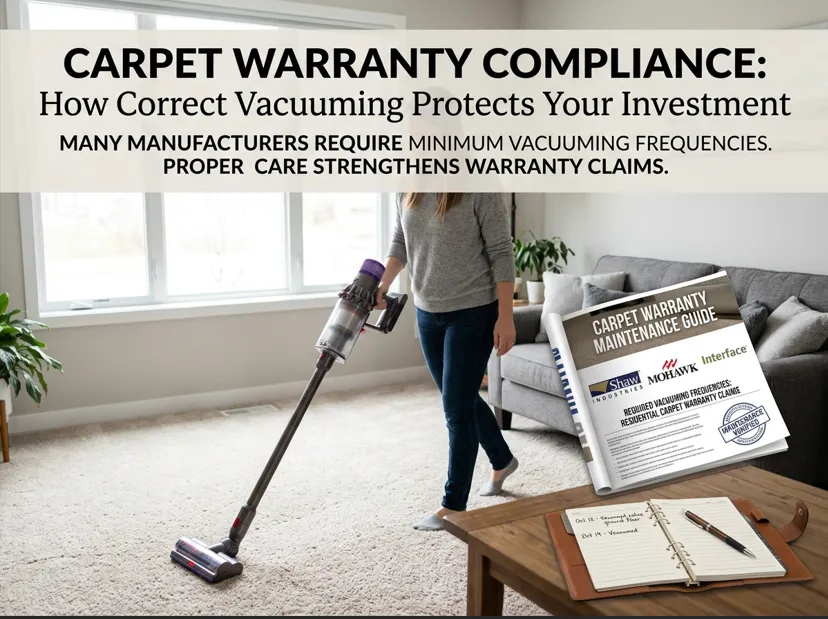
Many carpet manufacturers include maintenance requirements in their product warranties, and failure to meet those requirements can void coverage for premature wear claims. Shaw Industries, Mohawk Flooring, and Interface, among other major carpet manufacturers, specify minimum vacuuming frequencies and in some cases minimum vacuum performance standards as conditions of their residential carpet warranties.
Reviewing the warranty documentation for installed carpet and matching the vacuuming frequency and method to those specifications is worth the few minutes it takes. In cases where carpet shows premature wear and a warranty claim is filed, manufacturers may ask about maintenance practices, and documented adherence to recommended vacuuming schedules strengthens the claim significantly.
The IICRC S001 Standard and Reference Guide for Professional Carpet Cleaning also addresses vacuuming as a foundational component of carpet maintenance programs, and its recommendations align closely with manufacturer guidance from leading brands.
Keep Your Carpet Warranty Valid — Book a Pro Clean Today
Final Thoughts on Vacuuming Correctly to Extend Carpet Life
Correct vacuuming is the foundation on which every other aspect of carpet longevity is built. Professional cleaning restores what vacuuming cannot fully address. Carpet protector treatments slow the rate of soiling. Entry point management reduces the volume of contaminants entering the home. But none of these interventions compensates for inadequate vacuuming between them.
The adjustments required to vacuum correctly are genuinely small: slow down the pace, overlap passes, change direction, match beater bar height to pile type, maintain the equipment, and adjust frequency to match actual soil load by zone rather than applying a uniform schedule across the entire home. These changes require no new investment if you already own a quality HEPA-filtered vacuum and cost nothing beyond a modest amount of additional time and attention per session.
Carpet is typically one of the largest single investments in residential interior surfaces. The difference between carpet that lasts 8 years and carpet that lasts 15 years in the same home is overwhelmingly a function of how it is maintained — and vacuuming correctly is the single highest-leverage maintenance decision available to any homeowner on any budget.