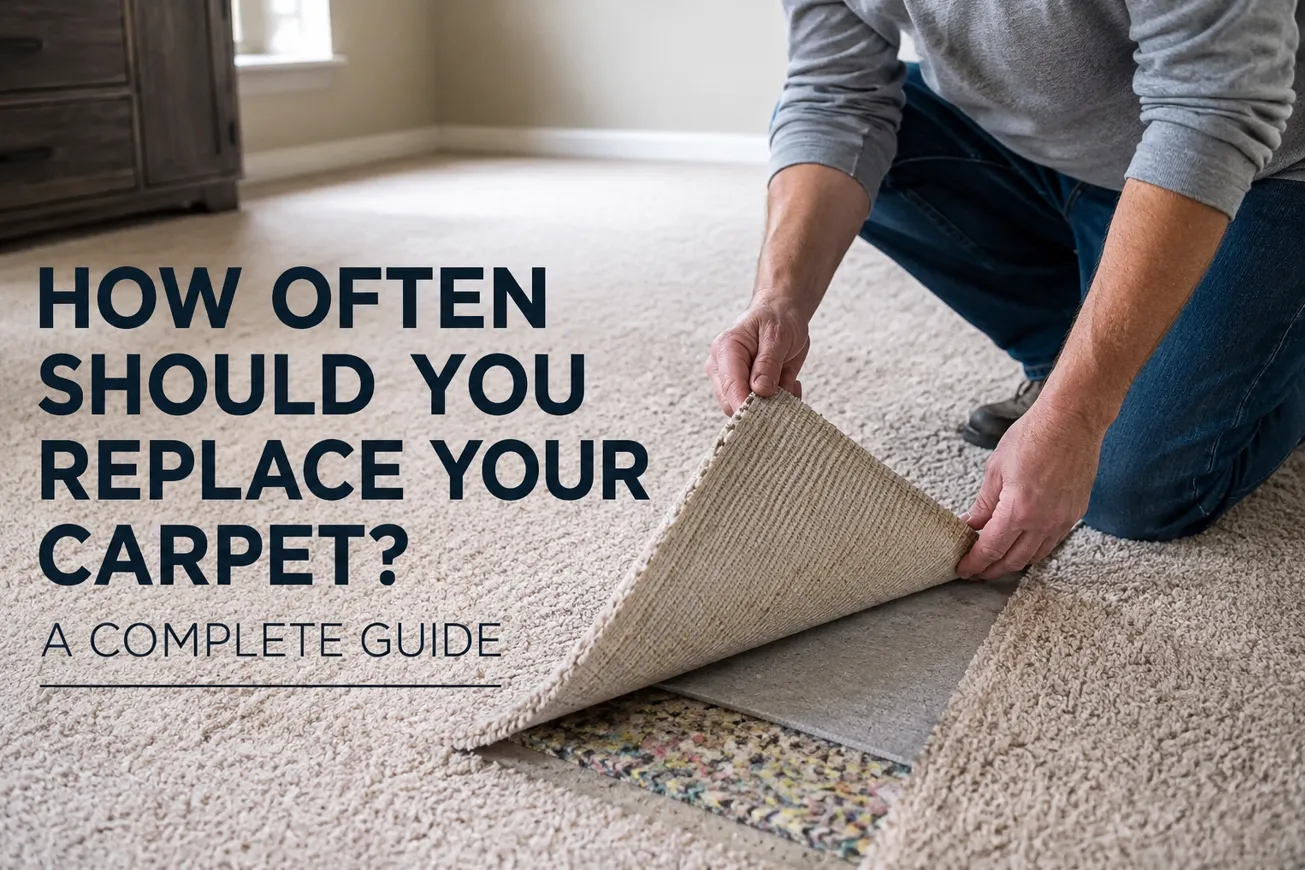
How Often Should You Replace Your Carpet?
You should replace your carpet every 5 to 15 years, depending on the fiber type, foot traffic, maintenance habits, and the room it is installed in. Most households replace carpet every 10 years on average, but high-traffic zones like hallways, living rooms, and stairways may need replacement in as few as 5 years, while a well-maintained bedroom carpet can comfortably last closer to 15 years or beyond.
That is the short answer. But if you have ever stood in your living room wondering whether your carpet still has life in it or whether you are just delaying the inevitable, the real answer depends on a lot more than just age. This guide walks you through everything you need to know, including carpet lifespan by material, the warning signs that demand action, and tips that can genuinely stretch your carpet’s years.
Why Carpet Replacement Timing Actually Matters
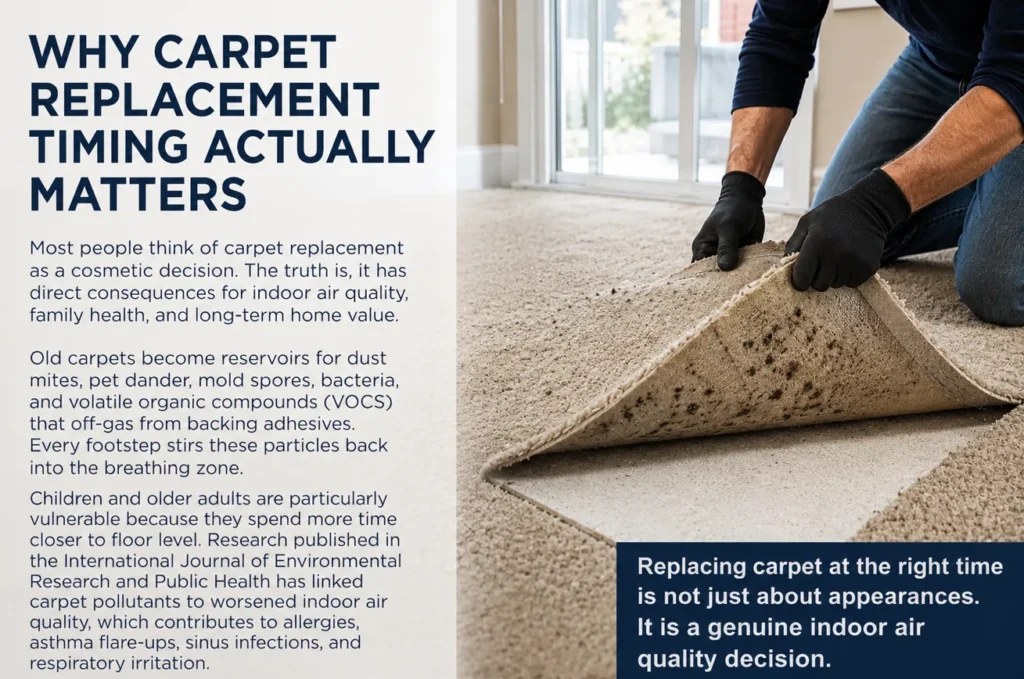
Most people think of carpet replacement as a cosmetic decision. The truth is, it has direct consequences for indoor air quality, family health, and long-term home value.
Old carpets become reservoirs for dust mites, pet dander, mold spores, bacteria, and volatile organic compounds (VOCs) that off-gas from backing adhesives. Every footstep stirs these particles back into the breathing zone. Children and older adults are particularly vulnerable because they spend more time closer to floor level. Research published in the International Journal of Environmental Research and Public Health has linked carpet pollutants to worsened indoor air quality, which contributes to allergies, asthma flare-ups, sinus infections, and respiratory irritation.
Replacing carpet at the right time is not just about appearances. It is a genuine indoor air quality decision — and for San Angelo homeowners, where West Texas dust accelerates fiber contamination year-round, that decision carries even more weight.
How Long Does Carpet Last? Average Lifespan by Fiber Type
The single biggest predictor of carpet longevity is the fiber it is made from. Here is a realistic breakdown based on material:
| Carpet Fiber | Average Lifespan | Best Suited For | Key Strengths |
|---|---|---|---|
| Nylon | 10 to 15 years | High-traffic areas, hallways, stairs | Excellent durability, abrasion resistance, good resilience |
| Polyester (PET) | 5 to 10 years | Bedrooms, low-traffic rooms | Strong stain resistance, vibrant color retention |
| Triexta (SmartStrand) | 10 to 15 years | Family rooms, homes with pets | Stain resistance, softness, eco-friendly sourcing |
| Olefin (Polypropylene) | 5 to 10 years | Basements, outdoor-indoor areas | Moisture resistance, budget-friendly |
| Wool | 10 to 20+ years | Bedrooms, formal living spaces | Natural durability, luxurious feel, sustainable |
Nylon is the most widely recommended fiber for busy households. It recovers well from compression, resists abrasion, and holds its texture longer than most alternatives. Premium nylon treated with stain-resistant coatings can push well past the 15-year mark.
Polyester offers a soft underfoot feel and excellent stain resistance at a lower price point, but it mats and loses its bounce faster in areas with heavy foot traffic. If you install polyester in a main hallway, expect to revisit the replacement conversation sooner than you would like.
Wool is the gold standard for longevity. A well-maintained wool carpet can last 20 years or more. The catch is that wool requires more careful cleaning, is sensitive to moisture, and carries a significantly higher upfront cost. If you have wool carpet or wool area rugs in your home, professional rug cleaning by a specialist who understands natural fiber care is essential for preserving both the appearance and lifespan of that investment. For the right household, wool pays for itself over time.
Triexta, marketed under names like SmartStrand, sits between nylon and polyester in price while delivering comparable durability and outstanding stain resistance, making it a strong choice for homes with children or pets.
Room by Room: How Often to Replace Carpet
Replacement frequency is not a one-size-fits-all number. The room matters just as much as the fiber.
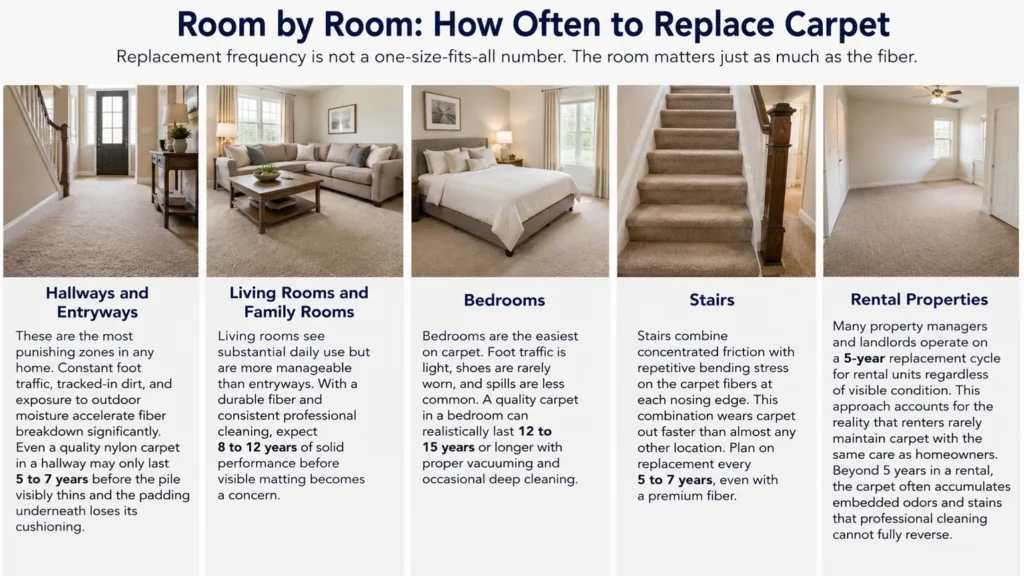
Hallways and Entryways
These are the most punishing zones in any home. Constant foot traffic, tracked-in dirt, and exposure to outdoor moisture accelerate fiber breakdown significantly. Even a quality nylon carpet in a hallway may only last 5 to 7 years before the pile visibly thins and the padding underneath loses its cushioning. Research from Lawrence Berkeley National Laboratory has documented that footwear tracks in a substantial proportion of household contaminants through entry points, making hallways and entryways the highest-accumulation zones in any carpeted home.
Living Rooms and Family Rooms
Living rooms see substantial daily use but are more manageable than entryways. With a durable fiber and consistent professional carpet cleaning, expect 8 to 12 years of solid performance before visible matting becomes a concern.
Bedrooms
Bedrooms are the easiest on carpet. Foot traffic is light, shoes are rarely worn, and spills are less common. A quality carpet in a bedroom can realistically last 12 to 15 years or longer with proper vacuuming and occasional deep cleaning.
Stairs
Stairs combine concentrated friction with repetitive bending stress on the carpet fibers at each nosing edge. This combination wears carpet out faster than almost any other location. Plan on replacement every 5 to 7 years, even with a premium fiber.
Rental Properties
Many property managers and landlords operate on a 5-year replacement cycle for rental units regardless of visible condition. This approach accounts for the reality that renters rarely maintain carpet with the same care as homeowners. Beyond 5 years in a rental, the carpet often accumulates embedded odors and stains that professional cleaning cannot fully reverse.
8 Clear Signs It Is Time to Replace Your Carpet Now
Age alone should not be your only trigger. The condition of the carpet is what ultimately matters. Watch for these indicators:
1. Matting and Crushed Fibers That Will Not Spring Back
When carpet fibers get permanently crushed and no longer recover after cleaning, the structural integrity of the pile is gone. This is especially common with polyester. Once matting is widespread, no amount of grooming or cleaning reverses it.
2. Persistent Odors That Survive Professional Cleaning
After a professional hot water extraction cleaning in San Angelo, your carpet should smell fresh. If a musty, sour, or ammonia-like odor returns within days, the smell has penetrated into the carpet pad or subfloor beneath. At that point, surface cleaning is treating symptoms rather than the source.
3. Visible Mold or Mildew
Mold in carpet is a serious health hazard. If your carpet has been wet for more than 72 hours without thorough drying and remediation, mold growth is very likely. According to the CDC’s guidelines on mold and health, mold spores become airborne and trigger respiratory problems, sneezing, coughing, and in sensitive individuals, sinus infections and asthma episodes. Mold that has reached the carpet backing or padding almost always warrants full replacement rather than cleaning.
4. Stubborn, Widespread Staining
Some stains, such as those from wine, bleach, tea, mustard, or pet urine soaked into the pad, cannot be fully removed regardless of the cleaning method used. When multiple stains accumulate and you find yourself covering them with furniture or area rugs, replacement is the more honest solution.
5. Worsening Allergy and Asthma Symptoms at Home
If household members are experiencing more frequent sneezing, eye irritation, or asthma episodes that improve when they leave the home, an aging carpet could be the culprit. Older carpet accumulates dust mites, pet dander, pollen, and mold spores deep in the fiber that routine vacuuming cannot fully reach. The Asthma and Allergy Foundation of America (AAFA) identifies carpet-trapped allergens including dust mites and pet dander as among the most common triggers for year-round allergic disease in residential settings.
6. Fraying, Rippling, and Visible Seam Failure
Frayed edges, loose seams, and rippling across the surface are signs of both fiber breakdown and installation failure. Rippling can be a tripping hazard and often signals that the carpet has been stretched beyond its elastic limit. While minor issues can be repaired, widespread structural problems usually indicate end of life.
7. Degraded or Uneven Carpet Padding
Your carpet’s padding is responsible for its cushioning, insulation, and noise reduction. When padding deteriorates, you feel unevenness underfoot, your footsteps sound harder, and the carpet above it wears out faster. Padding in high-traffic areas typically lasts around 10 years, though in lightly used rooms, quality padding can last up to 25 years.
8. Carpet Is Simply Too Old
Even if a carpet looks passable on the surface, one that has reached or exceeded its expected lifespan is likely holding contaminants that cleaning cannot address. The World Health Organization has recognized soiled and degraded carpet as a contributor to what it describes as Sick Building Syndrome. If your carpet is older than 15 years and was not a premium product to begin with, replacement is worth serious consideration for health reasons alone.
What Shortens Carpet Lifespan Faster Than You Think
Understanding what accelerates wear helps you protect your investment, or at least know when to expect the replacement conversation.
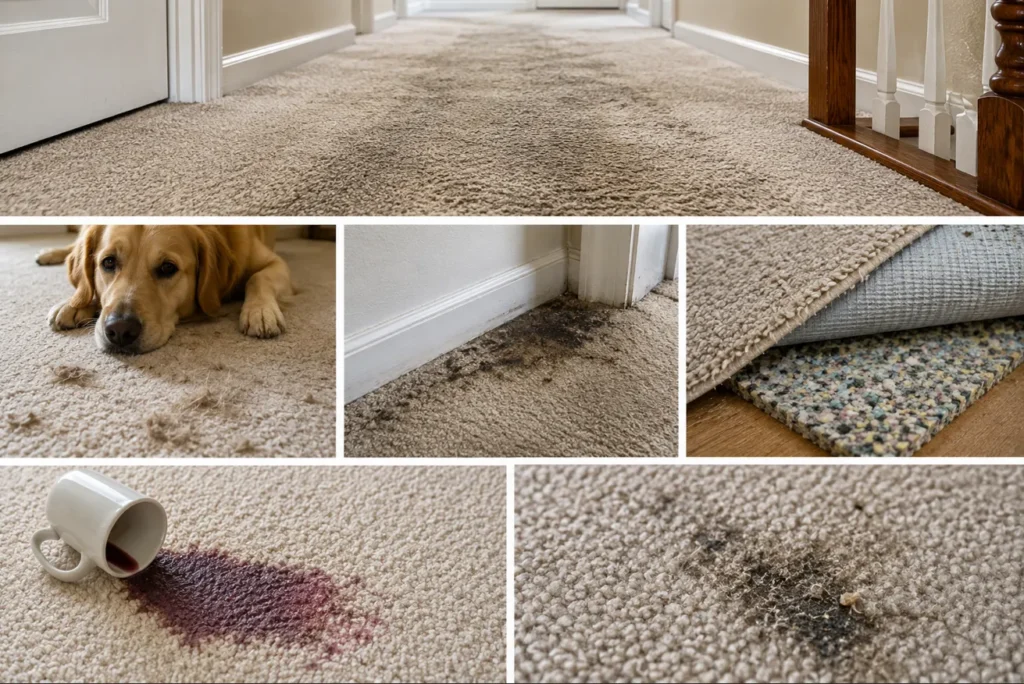
High foot traffic is the most obvious culprit. A carpet that would ordinarily last 15 years in a bedroom can be reduced to 7 years of usable life in a busy hallway. The friction from footsteps breaks down fiber twist, flattens the pile, and grinds dirt particles deeper into the backing over time. This problem is significantly more pronounced in San Angelo homes, where West Texas caliche and silica dust infiltrates carpet fibers continuously — a topic covered in depth in our post on how West Texas dust affects your carpet lifespan.
Pets introduce a unique combination of challenges: claws that snag and pull fibers, pet dander that embeds in the pile, urine that soaks through to the padding, and persistent odors that are notoriously difficult to fully neutralize.
Moisture and humidity are silent destroyers. Carpet that is regularly exposed to humidity above 60 percent creates ideal conditions for dust mites and mold. Basements and bathrooms are the highest-risk zones.
Poor quality carpet padding underneath directly affects how long the surface fiber lasts. Thin, low-density padding offers less protection against compression and wear, meaning the carpet above it breaks down faster.
Delayed stain treatment allows liquids to seep into the backing and pad where they cause permanent structural damage and become impossible to remove with surface cleaning alone.
How to Extend Your Carpet’s Life and Delay Replacement
The good news is that with the right habits, you can meaningfully push a carpet toward the longer end of its natural lifespan.
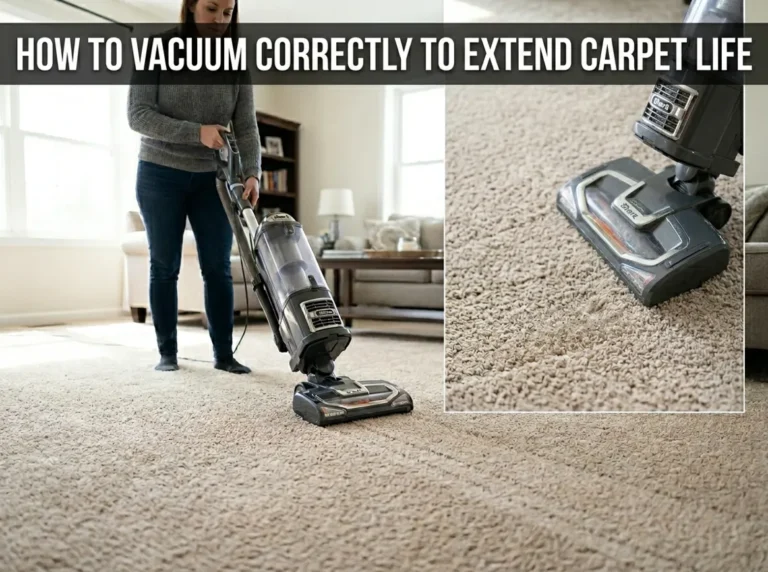
Vacuum consistently. Vacuuming at least once a week, and twice a week in high-traffic zones, prevents dirt from working its way into the fiber base where it acts like sandpaper against the pile. Our detailed guide on how to vacuum correctly to extend carpet life covers the right speed, technique, and equipment to maximize what each vacuuming session removes.
Invest in professional deep cleaning every 12 to 18 months. Hot water extraction, also known as steam cleaning, is the most effective method for removing embedded contaminants. Homes with pets, children, or allergy sufferers may benefit from professional cleaning every 6 to 12 months. Many carpet warranties actually require documented professional cleaning to remain valid.
Address spills immediately. Blotting rather than rubbing is critical. Rubbing spreads the stain and drives it deeper into the fiber. Acting within the first few minutes of a spill dramatically improves the chances of full removal.
Use doormats at every exterior entrance. A significant portion of the dirt and moisture that shortens carpet life is tracked in from outdoors. Good quality entry mats catch a meaningful amount of this before it reaches your carpet.
Adopt a no-shoes policy indoors. Shoes are the most efficient delivery system for outdoor dirt, bacteria, and abrasive particles into your carpeted areas. Removing shoes at the door is one of the most impactful maintenance habits you can adopt — particularly in communities like Ballinger, Christoval, and Miles where West Texas outdoor soil is exceptionally fine and abrasive.
Rearrange furniture periodically. This distributes wear patterns more evenly across the carpet, preventing concentrated matting in the same spots over years.
Use carpet protector products after cleaning. Scotchgard and similar fluoropolymer-based treatments add a layer of stain resistance after professional cleaning, extending the window between cleanings and improving resistance to spills.
Carpet Replacement vs. Carpet Cleaning: How to Know Which You Need
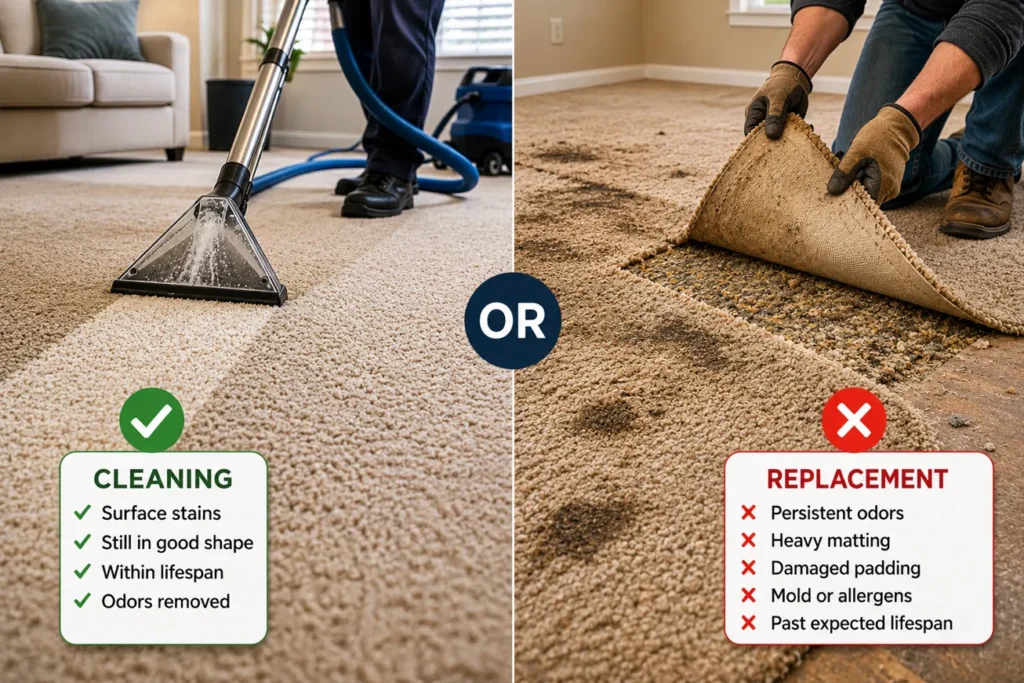
Many homeowners instinctively reach for a cleaning service when carpet problems emerge. Sometimes cleaning is genuinely the right call. Other times, it is money spent delaying the inevitable.
Cleaning is a reasonable first step when the carpet is structurally sound, when staining is surface-level and relatively recent, and when the carpet is still within the first half of its expected lifespan. Professional hot water extraction cleaning can dramatically improve the look and smell of a carpet that still has solid padding and intact fiber structure.
Replacement is the better decision when odors return quickly after professional cleaning, when matting covers major walkways and will not recover, when padding is uneven or has lost its support, when mold is present, when the carpet is beyond its expected lifespan, or when allergy symptoms persist despite regular cleaning.
Attempting to deep clean a carpet that is genuinely at the end of its functional life is a temporary fix that tends to disappoint. At that stage, the structural and health-related problems reside below the surface where no cleaning method can reach.
Carpet Replacement Cost: What to Expect
Knowing when to replace is one part of the decision. Knowing what it will cost helps you plan ahead and avoid sticker shock.
Carpet material is the largest cost variable. Budget polyester options can start as low as $1 to $2 per square foot, while premium nylon or triexta ranges from $3 to $7 per square foot. Wool sits at the top of the price range, often $8 to $20 per square foot or higher for specialty weaves.
Padding adds another $0.50 to $1.50 per square foot on average, and professional installation labor typically runs $1 to $3 per square foot depending on your region, room complexity, and whether subfloor preparation is needed.
For a standard 200 square foot bedroom, total carpet replacement including material, padding, and installation might run anywhere from $500 to $2,500 or more depending on the fiber selected. Higher quality fiber means a higher upfront cost but a longer replacement interval, which affects long-term value significantly.
Frequently Asked Questions
Can carpet last 20 years?
Yes, particularly in low-traffic areas like guest bedrooms with high-quality wool or premium nylon, though comfort and appearance naturally decline over time even with excellent maintenance.
How often should carpet be professionally cleaned?
At least once every 12 to 18 months for most households. Homes with pets, young children, or allergy sufferers may benefit from professional cleaning every 6 to 12 months. If you are in the San Angelo area, get a free carpet cleaning quote and our team will recommend the right cleaning schedule based on your household conditions.
Should I clean or replace carpet with pet odors?
If pet urine has soaked through to the padding and subfloor, professional cleaning can reduce but rarely eliminate the odor completely. In most cases, replacement of both carpet and padding is the only reliable solution.
When should you replace carpet in a rental property?
Most property managers recommend replacing rental carpet every 5 years regardless of condition, accounting for heavier wear and the practical limits of professional cleaning in rental scenarios.
Is old carpet bad for your health?
Yes. Older carpets that are not cleaned regularly trap dust mites, pet dander, mold spores, and other allergens deep in the fiber. These particles become airborne with foot traffic and can worsen allergies, trigger asthma, and negatively impact indoor air quality.
Final Thoughts
The honest answer to how often you should replace your carpet is this: stop looking at the calendar and start looking at the carpet itself. Age is a useful guideline, but the real triggers are the condition of the fiber, the state of the padding, the persistence of odors, and the health of the people living in the space.
If your carpet is past 10 years old, has visible matting, holds odors that cleaning cannot resolve, and is contributing to allergy symptoms, it has done its job and it is time to let it go. Replacing it is not a luxury expense. It is a straightforward investment in the comfort and air quality of your home.
On the other hand, if your 12-year-old bedroom carpet still looks and feels solid, replace it when it starts telling you it is ready, not when a calendar says so.
Extend Your Carpet’s Life — Get a Free Cleaning Quote in San Angelo