How to Clean Leather Furniture on Carpeted Floors
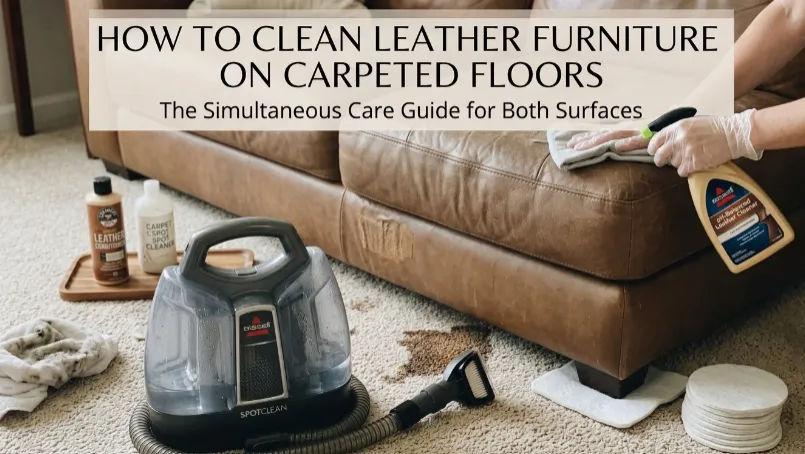
To clean leather furniture sitting on carpeted floors, start by vacuuming both the furniture and surrounding carpet to remove loose debris, then wipe the leather with a pH-balanced leather cleaner applied on a microfiber cloth, condition the leather afterward with a quality leather conditioner, and protect the carpet beneath and around the furniture by using furniture coasters or felt pads to prevent compression damage and moisture transfer. The process requires treating two different materials simultaneously because what drips, spills, or transfers from the leather cleaning process lands directly on your carpet, and what the carpet releases upward in the form of dust, fiber particles, and humidity affects the leather sitting above it.
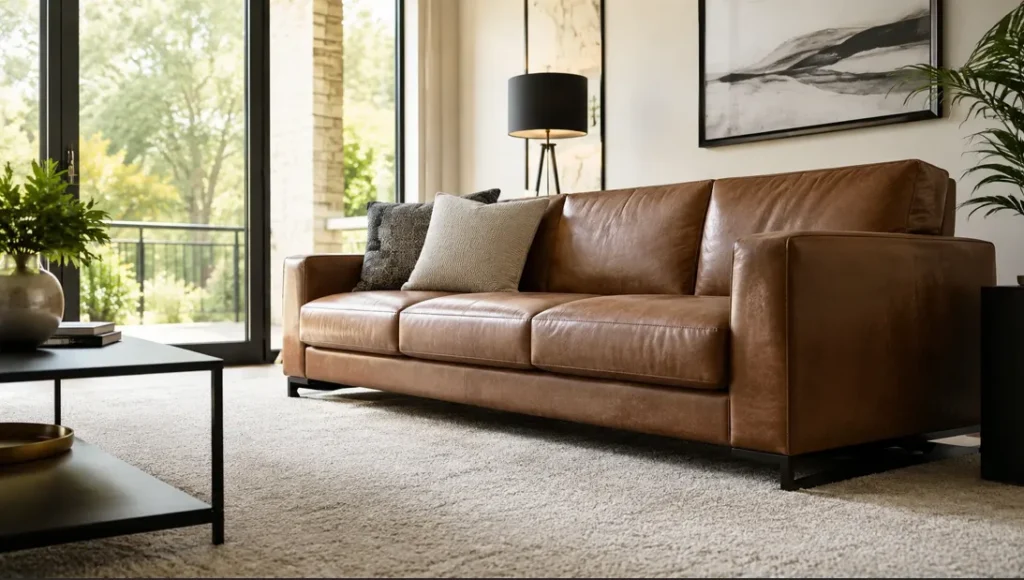
Most guides treat leather cleaning and carpet care as completely separate subjects. In reality, when leather furniture lives on carpet, the two surfaces are in a constant relationship with each other, and cleaning one without accounting for the other leads to problems that neither a leather specialist nor a carpet cleaner will fully address on their own. This guide covers both surfaces together, the way the problem actually exists in your home.
Why the Combination of Leather and Carpet Creates Unique Cleaning Challenges
Before getting into the how, it helps to understand why leather furniture on carpet is a more nuanced situation than either surface alone.
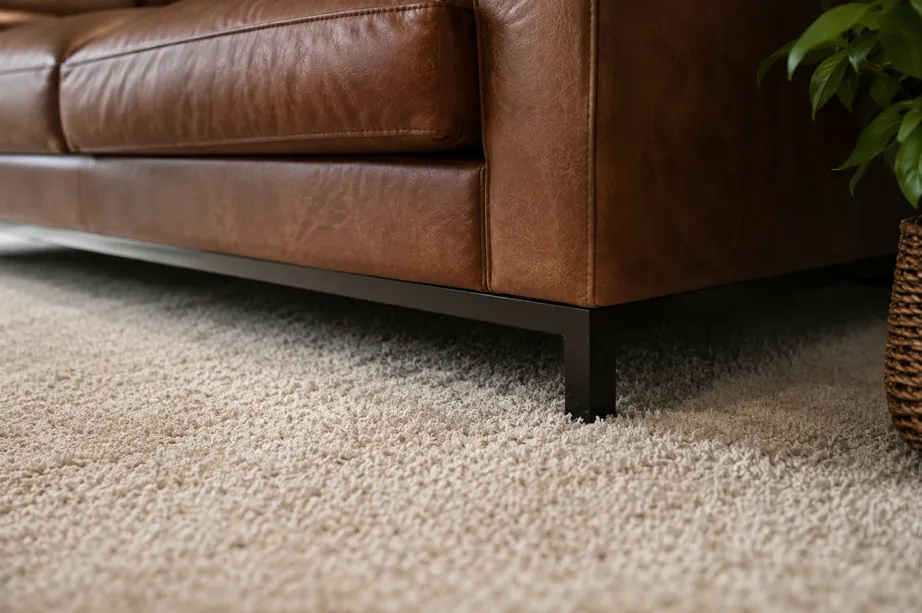
Leather is a natural material that breathes. It absorbs and releases moisture depending on the surrounding environment, and it is sensitive to pH levels, abrasive contact, and the residue left behind by cleaning products not formulated specifically for it. The Leather Industries of America and leather care specialists consistently emphasize that the biggest threats to finished leather upholstery are alkaline cleaners, excessive moisture, and physical abrasion, all of which can cause cracking, color transfer, and surface breakdown over time.
Carpet, meanwhile, acts as a reservoir. It collects dust, pet dander, food particles, humidity, and the residue of cleaning products used anywhere in the room. When leather furniture sits directly on carpet without protection, several transfer mechanisms come into play. Moisture from the carpet, particularly in humid conditions or after professional carpet cleaning in San Angelo, can wick upward into the base of leather sofas and chairs, causing the leather backing to develop mold or the base seams to weaken. Conversely, cleaning solutions dripped or misted onto leather during the cleaning process fall directly onto the carpet below, where they can create residue buildup or contribute to discoloration if they contain solvents or bleaching agents.
Understanding this two-way relationship shapes every decision in the cleaning process.
What You Need Before You Start
Gathering the right materials before beginning saves time and prevents the kind of mid-process improvisation that leads to mistakes. Here is what a properly equipped leather and carpet cleaning session requires.
For the leather, you need a pH-balanced leather cleaner formulated for finished upholstery leather. Products from brands including Leather Honey, Chemical Guys Leather Cleaner, Lexol, and Chamberlain’s Leather Milk are widely respected in the leather care community for their balanced formulations and consistent results. Avoid any all-purpose household cleaners, dish soap, baby wipes, or vinegar solutions on finished leather. Despite appearing frequently in DIY guides, these products either strip the leather’s protective finish, leave alkaline residue that causes long-term stiffening, or introduce moisture levels the leather cannot handle safely.
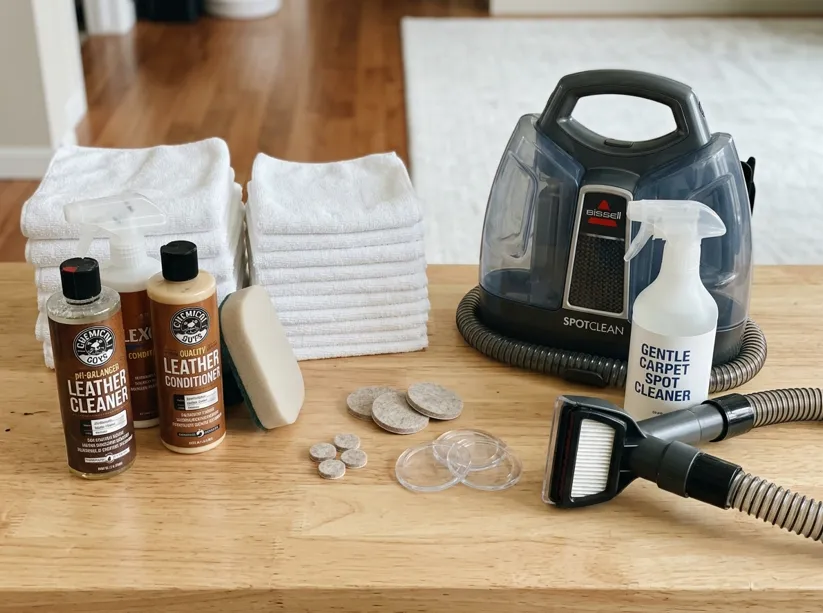
You also need a quality leather conditioner to apply after cleaning. Leather is animal hide that has been processed and finished, and like skin, it requires regular moisturizing to remain supple and crack-resistant. Lexol Conditioner, Leather Honey Conditioner, and Furniture Clinic Leather Care Balm are reliable options. The conditioner step is not optional; cleaning without conditioning leaves the leather temporarily more vulnerable to drying and cracking, particularly in low-humidity environments like San Angelo.
For the carpet, you need a HEPA-filter vacuum with an upholstery attachment, clean white microfiber cloths, a gentle carpet spot cleaner appropriate for your carpet fiber type, and ideally a small handheld extraction cleaner or carpet cleaning machine if you are doing a thorough session rather than routine maintenance.
Furniture coasters or felt furniture pads are worth having on hand to place under furniture legs after cleaning, both to protect the freshly cleaned carpet and to prevent future compression damage and moisture transfer at the contact points.
Step One: Prepare the Area and Protect the Carpet
Before applying any product to the leather, prepare the workspace so that the carpet is protected from drips and runoff.
Lay clean white cotton towels or old bath towels along the base of the furniture where it meets the carpet. This creates an absorbent barrier that catches any cleaning solution that migrates downward during the leather cleaning process. Use white towels rather than colored ones because dye transfer from colored fabric onto damp carpet is a genuine risk.
If the furniture has legs sitting directly on the carpet, slide a piece of plastic sheeting or a silicone mat under each leg before you begin. This prevents any cleaning solution that runs down the furniture leg from soaking into the carpet fibers at the contact point, which is one of the most common sources of mysterious carpet staining under leather furniture.
Move any area rugs that partially overlap with the furniture’s footprint to prevent cleaning solution from reaching them during the session.
Step Two: Vacuum the Leather and the Surrounding Carpet Together
The first active step is vacuuming, and it applies to both surfaces simultaneously.
Use the upholstery attachment on your vacuum to go over the entire leather surface, paying particular attention to the crevices between cushions, the base of the backrest, and the area where the seat meets the armrests. These zones accumulate dust, crumbs, pet hair, and fine particulate that will interfere with the leather cleaning process if not removed first. Attempting to wipe a leather surface that still has grit on it risks scratching the finish with abrasive particles caught between the cloth and the leather.
After vacuuming the leather, switch to the carpet attachment and vacuum thoroughly in the area immediately surrounding the furniture, including the sections of carpet under the furniture’s overhang that are rarely reached during routine vacuuming. This removes the loose particulate that would otherwise become disturbed and resettled during the cleaning process. Vacuum in slow overlapping passes rather than quick back-and-forth strokes to maximize soil removal.
If you have a HEPA-filtered vacuum, this step is particularly effective because fine dust particles that would otherwise become airborne during the cleaning process are captured rather than redistributed. This is especially important in San Angelo, where fine West Texas dust settles into carpet fibers faster than in most other climates.
Step Three: Clean the Leather Surface Properly
With the area prepared and vacuumed, begin the leather cleaning process.
Apply a small amount of your chosen leather cleaner to a clean microfiber cloth rather than directly onto the leather. Applying product directly to the leather surface risks uneven distribution and over-saturation in localized areas, which can cause water spotting or uneven finish lifting on sensitive leather types.
Work in small sections, approximately two square feet at a time, using gentle circular motions to lift soil from the leather surface. Use light to moderate pressure. The cleaner does the chemical work of loosening soil; mechanical pressure from the cloth simply helps distribute it. Avoid scrubbing or using back-and-forth strokes with heavy pressure, which can create visible rub marks on finished leather surfaces.
Pay extra attention to the areas of highest contact: the seat cushion centers, the armrest tops, and the headrest area of sofas and chairs. These zones accumulate skin oils, body lotion residue, and the kind of embedded grime that builds up gradually and becomes visible as a darkening or tacky texture on the leather surface. For these heavily soiled areas, a second pass with fresh product on a clean cloth section is more effective than increasing pressure on the first pass.
After cleaning each section, follow immediately with a clean dry microfiber cloth to buff away any remaining cleaner residue and restore the surface to a matte or satin finish depending on the leather type. Do not allow leather cleaner to sit on the surface and air dry, as this can leave a hazy residue.
Handling Specific Stains on Leather
Ink stains on leather require a different approach than general soil. A cotton swab lightly dampened with isopropyl alcohol at 70 percent concentration, applied with minimal pressure and blotted rather than rubbed, can lift fresh ink without spreading it. Always test in an inconspicuous area first. For dried ink, a specialist leather ink remover from brands like Furniture Clinic is more appropriate than DIY alcohol application.
Grease and oil stains respond well to a small amount of cornstarch applied directly to the fresh stain and left for several hours to absorb the oil before being brushed away gently. For older grease stains, a leather degreaser formulated for upholstery is the appropriate tool.
Food and beverage spills should be blotted immediately with a clean dry cloth to absorb as much liquid as possible before any cleaning product is introduced. The most common mistake with spills on leather is rubbing immediately, which spreads the stain and drives it deeper into the surface pores.
Step Four: Condition the Leather
Conditioning is the step that most people skip and most leather care professionals consider essential. Cleaning removes soil but also strips some of the natural oils that keep leather supple and prevent cracking. Conditioning restores those oils and creates a surface that resists future soiling more effectively.
Apply leather conditioner sparingly to a clean microfiber cloth and work it into the leather surface using smooth circular motions, covering the entire piece including the back panels and undersides of armrests that are often overlooked. Less product applied evenly produces better results than more product applied unevenly. Excess conditioner that is not absorbed into the leather surface simply sits on top and can transfer onto clothing.
Allow the conditioner to absorb for the time specified by the manufacturer, typically 10 to 30 minutes, and then buff away any excess with a clean dry cloth. The finished surface should feel smooth and slightly nourished rather than greasy or tacky.
Conditioning frequency depends on the environment and usage. In dry climates like San Angelo or heavily air-conditioned homes, leather conditioned every three to four months maintains its suppleness effectively. In more moderate environments with less aggressive humidity control, twice yearly conditioning is generally sufficient.
Step Five: Address the Carpet Beneath and Around the Furniture
Once the leather is cleaned and conditioned, turn full attention to the carpet, starting with the areas that were covered during the leather cleaning process.
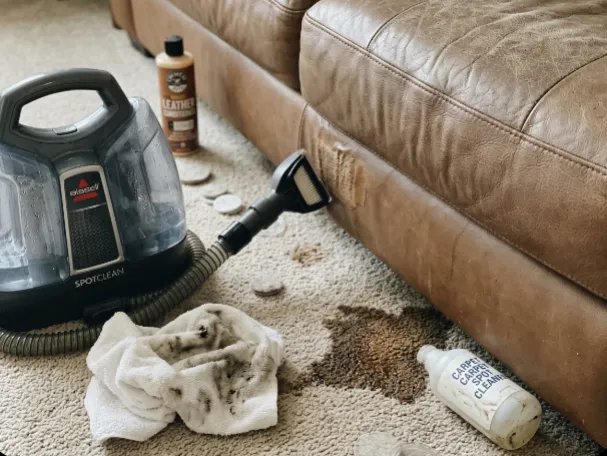
Remove the protective towels carefully and inspect the carpet beneath them for any cleaning solution that may have transferred despite the protection. If any residue is present, blot it immediately with a clean damp cloth and then a dry cloth to prevent it from setting.
The carpet area immediately surrounding leather furniture deserves more thorough cleaning than the rest of the room for a specific reason. This zone accumulates soil released from the furniture during use, including leather conditioner overspray, crumbs and debris that fall from the furniture surface, pet hair that collects along the base, and the compressed, often discolored carpet that develops at furniture contact points over time. Homeowners in Ballinger, Christoval, and Miles face the same West Texas dust challenges that make this zone particularly prone to embedded soil buildup.
For routine maintenance cleaning of this area, a thorough vacuum followed by a light application of a foam carpet cleaner worked in with a soft brush and then extracted with a wet-dry vacuum or small carpet cleaning machine is sufficient. For deeper cleaning or when the carpet shows visible discoloration from long-term furniture placement, a portable hot water extraction cleaner delivers significantly better results than foam-only methods. If the discoloration is persistent or the carpet has not been professionally cleaned in over a year, booking a professional carpet cleaning in San Angelo is the most reliable way to restore the area fully.
Addressing Furniture Leg Indentations in Carpet
Leather furniture is heavy, and the concentrated weight of its legs creates indentations in carpet pile over time. These indentations become more pronounced the longer the furniture sits in one position without being moved.
To lift indentations after cleaning, hold a clothing steam iron several inches above the compressed area without touching the carpet and apply steam for 15 to 20 seconds. Then use your fingers or a stiff carpet brush to work the pile back upright while the steam is still present and the fibers are warm and pliable. Repeat as needed. This technique works on nylon and wool carpet particularly well. It is less effective on polyester, which has less fiber memory.
After restoring the pile, place quality furniture coasters under each leg to distribute the weight over a larger carpet surface area, significantly reducing future indentation development.
Get a Free Carpet Cleaning Quote in San Angelo
How Often Should You Clean Leather Furniture on Carpeted Floors
Frequency recommendations vary based on household conditions, but the following framework applies to most homes.
Routine dusting and light surface wiping of the leather should happen weekly, particularly in homes with pets or children. This prevents the gradual soil buildup that makes deep cleaning sessions more difficult and more frequent. A slightly dampened microfiber cloth is sufficient for weekly maintenance wipes; no cleaner is needed at this stage.
Full leather cleaning with a dedicated cleaner should happen every three to four months under normal household conditions, or every six to eight weeks in homes with heavy use, multiple pets, or occupants who frequently eat on or near the furniture.
Conditioning should follow every cleaning session and also be done independently between deep cleaning sessions in dry or low-humidity environments.
The carpet surrounding and beneath the furniture should be vacuumed with the same frequency as the rest of the room, and deep cleaned professionally at least once per year, or more frequently if the household includes pets or allergy sufferers. The Carpet and Rug Institute (CRI) recommends hot water extraction as the preferred professional cleaning method for maintaining carpet life and hygiene beneath and around heavy furniture.
Common Mistakes That Damage Both Leather and Carpet
Understanding what not to do is at least as valuable as knowing the right steps, and several very common mistakes simultaneously damage both surfaces.
Using steam cleaners directly on leather is one of the most damaging errors a homeowner can make. Steam cleaning machines deliver moisture and heat at levels that can warp leather, cause it to stiffen, or strip its surface finish entirely. The steam that misses the leather surface and hits the carpet below also creates over-wetting risks that can lead to mold beneath the carpet pad.
Using the same cleaning cloth on both leather and carpet without changing it transfers soil, cleaning product residue, and fiber particles from one surface to the other. Always use fresh cloths for each surface and each stage of the cleaning process.
Allowing cleaning solutions to pool in carpet seams at the base of leather furniture is a common source of the mysterious dark staining that homeowners often notice developing gradually along the furniture’s footprint. Always blot and extract any cleaning solution that reaches the carpet immediately.
Skipping the conditioning step after leather cleaning, particularly in air-conditioned environments, leaves the leather temporarily more porous and more likely to absorb carpet dust and airborne particles. This is especially relevant for upholstery cleaning in San Angelo homes where West Texas dust creates a higher-than-average particulate environment indoors.
Schedule Your Upholstery & Carpet Cleaning Today
Protecting Both Surfaces Between Cleaning Sessions
A few simple protective measures significantly extend the interval between deep cleaning sessions and keep both surfaces in better condition.
For leather, a quality leather protectant spray applied after conditioning creates an additional barrier against spills, UV discoloration, and the kind of gradual soil accumulation that comes from everyday contact. Products like TriNova Leather Conditioner and Protectant or Chamberlain’s Water Protectant combine conditioning and protection in a single application.
For the carpet beneath and around the furniture, high-quality furniture coasters in felt or rubber distribute leg weight, prevent compression damage, and create a slight barrier against moisture transfer between the carpet and the furniture base. Replace felt pads annually as they compress and lose effectiveness over time.
Placing a thin, washable cotton rug or runner in the highest-traffic zone in front of the leather furniture provides an additional layer of protection for the carpet beneath while being easy to remove and launder regularly. This is particularly useful in front of leather sofas where foot traffic is concentrated during daily use.
A Note on Different Leather Types and How They Affect Cleaning
Not all leather responds identically to the same cleaning approach, and identifying your leather type before selecting products prevents accidental damage.
Full-grain leather is the highest quality and most durable type, with a natural surface that shows the original grain of the hide. It responds well to quality leather cleaners and conditioners and develops a patina over time that many owners find desirable. It is also the most forgiving of minor cleaning product variations.
Top-grain leather has had the surface sanded and finished, giving it a more uniform appearance and slightly better stain resistance than full-grain. It responds well to the cleaning process described in this guide.
Bonded leather, sometimes called reconstituted leather, is made from leather scraps bonded together with polyurethane and is the least durable type. It is highly prone to peeling and cracking, particularly when cleaned with products not specifically formulated for bonded leather. Many leather cleaners designed for genuine full-grain or top-grain leather can accelerate peeling on bonded leather. Check the furniture manufacturer’s care tag carefully before selecting cleaning products for bonded leather pieces.
Suede and nubuck are unfinished leather types with a velvety surface that requires entirely different care from smooth finished leather. Water-based cleaners are not appropriate for suede or nubuck; specialized dry cleaning products and suede brushes are the correct tools for these materials. If you are unsure how to safely clean suede or nubuck pieces, a professional upholstery cleaning service with experience in delicate materials is the safest option.
When in doubt about your leather type, test any cleaning product on the underside of a cushion or the back panel of the furniture where any adverse reaction will not be visible.
Final Thoughts on Cleaning Leather Furniture on Carpeted Floors
Cleaning leather furniture on carpeted floors is a two-surface job that rewards preparation, the right products, and the understanding that both materials influence each other continuously. The leather sitting above and the carpet lying below are not independent problems; they are a single cleaning challenge that benefits from being approached as one.
The most important principles are consistent: use pH-balanced products formulated specifically for each material, protect each surface from the cleaning process applied to the other, never skip the conditioning step after leather cleaning, and address the carpet beneath and around the furniture with the same seriousness you bring to the leather itself.
Done correctly and consistently, a leather and carpet cleaning routine preserves both surfaces for significantly longer than either would last under neglected or incorrectly managed conditions. Quality leather furniture and quality carpet are long-term investments, and treating them with the care their materials require is the most practical way to protect both. When the carpet beneath your furniture needs more than routine maintenance can handle, professional carpet cleaning in San Angelo is the most reliable path back to a fully restored floor.